A very good friend of mine wrote the following post which explains in a calm reasoned way the widening gap between rich and poor in the United States. Please read it in that light. Maybe have Molly playing in the background
I keep thinking about the stuffwe’ve been discussing, and I think I’m beginning to understandwhat’s going on. I will try to lay out my ideas with language thatI hope will appear as apolitical as possible. Here goes.
Throughout all the national back andforth about “taxing rich,” and having them “pay their fairshare,” some facts have emerged that I think are incontrovertible byanyone on either side. The wages, and therefore disposable income, of themiddle class and below have remained stagnant or are declining. The wagesand disposable income of people at the top have increased. Here’sthe data from the Census Bureau on share of aggregate US income between 1967 and 2009:
Bottom quintile—down 18%
Second quintile—down 26%
Middle quintile—down 18%
Fourth quintile—down 4%
Top quintile—up 15%
Top 5%--up 26%
Understand that I’m not makingjudgments here. The right would say that the big earners should have morewealth, and the left would say it’s unfair. I’m not making ajudgment either way.
What I see here, however, does explain tome the lack of demand in the economy. The overall economy is driven bythe purchases of individuals and households. All households in the firstfour quintiles have experienced a decline in wealth over the last 42 years. This means that for the vast majority of things bought and sold in themacro economy, there is less disposable wealth to spend on them. Yes,there are probably more yachts, and luxury automobiles and second and thirdhomes being sold to the top quintile, but those, in aggregate, make up but asmall portion of the big economy. They’re niche markets you mightsay.
I remember, in a discussion with my son,saying that I don’t think many people in business have the vision ofHenry Ford. Henry Ford dramatically raised his workers’ wages and broughtdown the wrath of his fellow businessmen when he instituted the “fivedollar day,” but replied that he knew that if his employees made a betterwage, more of them would buy his cars, and they obviously did.
The engine that drives the economy is thatbottom 80%, who buy groceries, and IPads, and flat screen TVs, and cars, andclothing and all the rest. When it has less money to spend, the economystagnates. Many conservatives are fond of comparing the overall economyto a household budget, pointing out the wrongheadedness of spending more thanyou take in. Well, this bottom 80% have household budgets that have beentaking in less each year. So they’re doing the natural and rightthing. They’re adjusting spending to match income.
So it’s not just an issue of jobsand hiring, although those things are clearly very important. It’sthat the people who drive the economy have less gas in the tank to drive itwith than they ever had, and so demand begins to dry up. I think that youcan cut taxes to zero on the supplier side, and get rid of every regulationthat costs them money, and it won’t change the fundamental fact that thebuyers of what those suppliers supply simply have less money to spend.
The people in the top quintile have donea marvelous job of maximizing their earnings. But, to the degree thattheir earnings require that the bottom four quintiles have the income to helpthem earn more money things are trending toward the precarious. This iswhat I see in our economy right now. The drivers of the economy areslowly being marginalized, and it was their ability to buy all the crazyvariety of products and services that built the economy in the first place.
Understand that I am no preaching“class warfare” here, but merely observing the facts. Thereis less disposable money out there to buy things, and this to me is the core ofthe problem. Now, I don’t have a solution. But I do believethat unless we do something—and believe me, I don’t know what thatsomething is—to get to a state where the buyers can buy, the economy willremain stagnant. This is why I feel that what Eric Cantor is suggestingwon’t work. In fact, one might suggest that, rather than this beinga new solution, it is something we have already been doing for the last 40years or so. Our taxes on everyone are at the lowest level in 50 years,yet that reduced tax load does not appear to be making the buyers able to buymore. And even if it should somehow lead to hiring as Cantor claims (andwhich I, as you know, don’t believe), it is highly unlikely to increasewages overall and rectify our bottom 80% problem.
I am fearful that we have perhaps killedthe goose that laid the golden egg—the vast American middle class whogrew the economy. As I said, I don’t know what we should, or evencould, do at this point. There’s no way we’re going to justhand the bottom 80 money to spend. But I am convinced that getting thebottom 80 back to the level of wealth that they had just a few decades ago iswhat will change things for the better. Leaving this as it is, in thispolitical climate, is a recipe for economic disaster.
Tom

You are on a stool with a Catholic guy looking at the world through ethnic eyes.
Monday, August 22, 2011


Sunday, August 21, 2011
Revolution
I am a very active Flogging Molly Fan and this song adds to their power for me and points to a real understanding of the times on Molly's part. It is fitting it follows the Anya videos below.
Friday, August 12, 2011
Anya Kamenetz Videos
This post started out in my mind as a series of quotations from DIY U by Anya Kamenetz but I went to video because it it more suitable to this time. Still I am going to post the quotation from the book which made me seek out more information about this edupunk!
I have always worked in independent schools where the ideas expressed above are particularly threatening and ill received due to the control and selectivity these school exercise. Maybe the present paradigm's time has past. I will leave you to the videos.
I have been a technologist (hate the term) at two American high schools and lost my job over advocating these ideas (some people say I am an attack dog:))in a very strenuous way. Traditional teachers have asked me if they do anything right. They have not always liked my answers.
From DIY U by Anya Kamenetz
Technology upsets the traditional hierarchies and catagories of education. It can put the learner at the center of the educational process. Increasingly this means students will decide what they want to learn; when,where,and with whom; and they will learn by doing.
I have always worked in independent schools where the ideas expressed above are particularly threatening and ill received due to the control and selectivity these school exercise. Maybe the present paradigm's time has past. I will leave you to the videos.
Tuesday, August 09, 2011
Tapscott speaks

When I was considering this digital world for the first time, one of the most influential books (yes print book!) I read was Don Tapscott's Growing Up Digital(1998). It changed everything for me a teacher and began the journey that I am still on. Tapscott has written several other books, including, The Digital Economy(1996), Blueprint to The Digital Economy(1998),>Digital Capital(2000), Wikinomics(2006), and Macrowikinomics(2010). They make for a facinating body of work which I found to be right on the money. They also support a video he just posted on YouTube which I have embedded here.
Let me know what you think.
Saturday, July 23, 2011
Validate Someone
We have ourselves validated by those around us. Most people try to validate themselves by making someone else feel bad. I do not believe that works. This short flick validates:) my point.
Try to help someone validate themselves by making them smile.
Try to help someone validate themselves by making them smile.
Tuesday, July 19, 2011
She is anything but "Vile"
Debbi Wasserman-Smith speaking before the United States House of Representatives today...
Monday, July 18, 2011
Sunday, July 03, 2011
Keep this Train a rolling.....
It has been a bit difficult for me the last few days and I found myself beginning to wallow in some self pity. I have no job, I an officially unemployed, and I have been afraid of the idea that this bump in Obama's road may just not go away very quickly. I am over that.....and to celebrate that for now here is a song by Lisa Lim and Over the Limit..... Just Keep this Train A rollin
Sunday, June 26, 2011
Wednesday, June 08, 2011
A tribute to Paddy...
My partner Paddy is answering the Call of the Wild in a few days. He has not contributed to the Blog for some time now and I miss him here. I just wanted him to know that he is remembered and will be missed this summer. And to hope he finds a way to send us a post or two....
A song from Flogging Molly's new album in his honor...
The WOP
A song from Flogging Molly's new album in his honor...
The WOP
Thursday, May 26, 2011
Friday, May 20, 2011
Lisa Lim a blues player of note....
Lisa Lim and her band, Over the Limit play some really good music. I am trying some new embed techniques. Enjoy!
Thursday, April 21, 2011
A Cross Post with 6AM Thoughts
This is the opening paragraph of an article, The Instructional Power of Digital Games, Social Networking, Simulations and How Teachers Can Leverage Them, I discovered from a Tweet this morning. I have been an advocate of simulation gaming for 30 years and am particularly happy to see work like this being done. I hope you will take the time to read the entire article which I have included the link for. The article was written by Eric Klopfer, Scot Osterweil, Jennifer Groff, and Jason Haas from MIT.
The Instructional Power of Digital Games, Social Networking, Simulations and How Teachers Can Leverage Them
What is good learning? That may be a subjective question. But it’s likely that many educators would give answers that fall in the same ballpark…~~
…students collaborating and discussing ideas, possible solutions…
…project-based learning, designed around real world contexts…
…connecting with other students around the world, on topics of study…
…immersing students in a learning experience that allows them to grapple with a problem,
gaining higher-order thinking skills from pursuing the solution…
To many educators, these notions are music to their ears. Would it seem terribly strange then to hear that students indeed are doing these things regularly outside of their classrooms? While Timmy or Susie may not be running home from school saying, “What fun, deeply-engaging learning experience can we do today?”, they are engagingwith new technologies that provide them with the same opportunities. Every day, many students are spending countless hours immersed in popular technologies—such as Facebook or MySpace, World of Warcraft,or Sim City—which at first glance may seem like a waste of time, and brain cells. But these genres of technologies—Social Networking, Digital Gaming, and Simulations—deserve a second, deeper, look at what’s actually going on.
The Instructional Power of Digital Games, Social Networking, Simulations and How Teachers Can Leverage Them
Tuesday, April 19, 2011
Do Not Tilt Your Head.......
Cross posted from 6AM Thoughts.
I regularly read a blog called TeachPaperless. Yesterday, there was a post in Teachpaperless entitled "I Don't Want More Professional Development. It began:
Reading that entry caused me to write a comment on Teachpaperless which I have revised into the blog entry below. Enjoy.
I am not sure how many of the readers here have ever been on Second Life. If you have, you may have noticed what your avatar does when you log off...the avatars body goes limp and their head dips to the right and their chin rests on their shoulder.
Well so many teachers seem to be in a Teacher Second Life while reading this blog. When we leave here and go to school our personas do exactly what a second life avatar does---we go limp and turn our heads away from the reality around us.
And the reason we do it, we are afraid of losing our jobs. And it is a founded fear. If you do not go to sleep and say the same things in faculty meetings, professional development or training sessions, in the faculty room, in meetings with principal, or out on the playground or in the lunch room, that you espouse here, you very well may get fired. School is about control. This blog is about liberation! We all talk liberation but are we willing to walk liberation?
Every revolution has it casualties. If you really want a revolution it may be you. It has been me.
I regularly read a blog called TeachPaperless. Yesterday, there was a post in Teachpaperless entitled "I Don't Want More Professional Development. It began:
We don't need more "professional" development. We need social development. Or at least we need to recognize it and recognize that the ultimate outcomes we often desire from the best of professional development are actually an outcome of social development. We need a development of human capacity, not an adherence to the rules of our established profession. We need to build our relationships for the purpose of furthering our humanity, not furthering our careers
Reading that entry caused me to write a comment on Teachpaperless which I have revised into the blog entry below. Enjoy.
I am not sure how many of the readers here have ever been on Second Life. If you have, you may have noticed what your avatar does when you log off...the avatars body goes limp and their head dips to the right and their chin rests on their shoulder.
Well so many teachers seem to be in a Teacher Second Life while reading this blog. When we leave here and go to school our personas do exactly what a second life avatar does---we go limp and turn our heads away from the reality around us.
And the reason we do it, we are afraid of losing our jobs. And it is a founded fear. If you do not go to sleep and say the same things in faculty meetings, professional development or training sessions, in the faculty room, in meetings with principal, or out on the playground or in the lunch room, that you espouse here, you very well may get fired. School is about control. This blog is about liberation! We all talk liberation but are we willing to walk liberation?
Every revolution has it casualties. If you really want a revolution it may be you. It has been me.
Tuesday, April 12, 2011
An Open Educator Manifesto
This is a reprint from David Truss's Connected Principals Blog.
[Version I: Just the Manifesto]
My Open Educator Manifesto
‘We’ educate future citizens of the world
Teaching is my professional practice
I Share by default
I am Open, Transparent, Collaborative, and Social
My students own their own: (Learning)
• learning process
• learning environment
• learning products
• learning assessment
My students belong to learning networks
Every student deserves customized learning
• Student voice
• Student choice
Every educator deserves customized learning
I have high expectations
I Care, Share, and Dare
I am a role model
I am the change I want to see in Education!
[Version I: Just the Manifesto]
My Open Educator Manifesto
‘We’ educate future citizens of the world
Teaching is my professional practice
I Share by default
I am Open, Transparent, Collaborative, and Social
My students own their own: (Learning)
• learning process
• learning environment
• learning products
• learning assessment
My students belong to learning networks
Every student deserves customized learning
• Student voice
• Student choice
Every educator deserves customized learning
I have high expectations
I Care, Share, and Dare
I am a role model
I am the change I want to see in Education!
Tuesday, April 05, 2011
Saturday, April 02, 2011
How do I affect this........
The top 1 percent have the best houses, the best educations, the best doctors, and the best lifestyles, but there is one thing that money doesn’t seem to have bought: an understanding that their fate is bound up with how the other 99 percent live. Throughout history, this is something that the top 1 percent eventually do learn. Too late. -Joseph Stiglitz Vanity Fair
Saturday, March 19, 2011

Saturday, February 19, 2011
Games-Can they be good for us?

I am a gamer. Playing games is an intregal part of who I am. Playing games is a good thing. I can remember sitting on Paul Filbert's front porch in the summer time and playing Avalon Hill war games or Rummy Royale. I can remember playing chess in Hankie Pauley's kitchen on Friday nights with the glorius wooden chess he brought back from his trip to Mexico. I can remember the giant Risk tournaments we played over entire weekends. Joey Chachulski usually won them. I can remember designing lionel railroad empires in Jeffery Pyzinski's basement or creating rockets out empty CO2 cartridges and launching them filled with matchheads for solid fuel and soldered on sheet metal wings for guidance. Kermit Avenue had the best young Diplomacy players in Buffalo, New York I am sure! Our imaginations raced with new ideas and expanding horizons all of the time. We were not stressed, we did not feel depressed at all. We empowered ourselves.
Games are good for us. They empower us. A recent book by Dr. Jane McGonagal, Reality is Broken , has opened my mind to all types of new ideas, particularly the new science of happiness and the concepts of flow and fiero. Games produce flow and fiero. It makes for great reading and spurs ideas.

Couple Reality is Broken with Johann Huzinga's brilliant Homo Ludens and you will gain new insight into human nature.
Video games also may help us to cope with the crazy world that speeds up every day and infuses us with great anxiety and depression. A research study from the East Carolina University cited the following statistics about human beings in this world we live in from the National Institute of Mental Health:
According to the National Institute of Mental Health in the United States an estimated 20.9 million American adults (9.5% of the U.S. population age 18 or older) suffers from a mood disorder, and more than two thirds of those (14.8 million U.S. adults) are cases of major depression. Depression is the leading cause of disability in the U.S. for people aged 15 to 44. Depressive disorders often co-occur with anxiety disorders, and approximately 40 million American adults (about 18 percent of all U.S. adults) have an anxiety disorder.
The study then when on to explore what effect playing video games has on subjects such as those refereneced above. Playing games like Bejeweled, Bookworm, and Peegle from Popcap games significantly reduced depression, stress and anxiety levels in the study groups. All of these games are free by the way and blocked by most school web

filters. I play all of these games and am particularly drawn to them after particularly stressful days at work or when I am feeling overwhelmed by my task and to-do lists. The results of the study are quite startling and deserve to be studied and applied in our schools.Video Games Can Reduce Depression And Anxiety - Study
should be read by every teacher in America.
Wednesday, February 09, 2011
O Say Can You Drink
I always knew that the tune of the Star Spangled Banner was a remix from an old english tavern song but I have never heard it before until a friend sent me this...
Tuesday, January 25, 2011
Sunday, January 23, 2011
American Uprising-A Review
Following is a review of Dan Rasmussen's American Uprising The review was written by Dr. Robert Shurmer and appeared in Googreads. Rasmussen is a former student of mine, and Dr. Shurmer is a former colleague.
Acclaimed historian of colonial America, Jack P. Green, has called the South “a negative example of what America had to overcome before it could finally realize its true self.” For two centuries, the struggle to 'integrate' the South into a more 'progressive' and 'mainstream' American narrative has flummoxed scholars, politicians, and cultural theorists of all shades. The South still tends to confound those who are not a part of it. Dan Rasmussen’s new book American Uprising perhaps adds another strut to Greene’s argument by providing a glimpse into the complex, and problematic, relationships among slaves, landholders, merchants, politicians, soldiers, privateers, and rogues of every shade and political allegiance in the steamy swamplands of Louisiana during the early years of the American Republic. The story Dan tells is ostensibly about a little-known, but substantial slave revolt in 1811 that occurred on the Andry Plantation located on Louisiana's German Coast forty miles north of New Orleans. The insurrection that marched on New Orleans that year may have included up to five hundred slaves (actual numbers are disputed), but broke up fifteen miles from the city when it came up against a smaller, but better armed, force of planter militia. While the enduring impact of this particular uprising remains debatable, Rasmussen’s narrative provides the fodder for a much deeper story about the ‘Americanization’ of the Deep South.
Rasmussen possesses a knack for conjuring up the sights, sounds, colors, and flavors of early 19th-century New Orleans and placing his readers at the side of his protagonists, both planter and slave. The slave experience takes center stage here as Rasmussen attempts to piece together the world inhabited by the West Africans Kook and Quamana, the primary organizers of the uprising. From their arrival in the port of New Orleans in 1806 with some 1500 other slaves to their executions following the failed uprising, Kook and Quamana are contextualized into the history of the region. Dan displays real skill and art in making sense of a complex story. While the actions of Kook and Quamana and the slave perspective generally remain central to the story -- the rich broth that is essential to any good gumbo to use an apt analogy -- Rasmussen transcends the narrative event of 1811 by analyzing the big picture as much as the actions of a few men.
Indeed, Dan is at his best when his focus widens and he places the events surrounding the Andry Plantation in the wider context of American-Caribbean history. He writes convincingly of a new nation flexing its muscle for the first time, eschewing established channels of European diplomacy, and successfully flaunting international law, using God’s law instead to justify its self-serving actions in Florida and Louisiana. One example is Fulwar Skipwith’s cunning and illegal seizure of Baton Rouge and the killing of the Spanish garrison, an action that cleared the path for the United States to assume control, by presidential proclamation, of West Florida. Rasmussen is supremely aware of the multiplicity of historical ingredients in his narrative of the 1811 uprising. He writes of French, Spanish, Haitian, Creek, Miccosukee, Akan, and Asante -- all bound in complex economic interdependency, all rubbing shoulders with the newly dubbed Americans in the cosmopolitan port of New Orleans, all providing meaty chunks to the spicy broth carefully laid down with the stories of Kook, Quamana, and Andry.
Rasmussen ultimately raises the thorny question of what is ‘authentic history’ when he attempts to make something of the fact that no one has made much of the slave revolt on the Andy Plantation. "Why," asks Rasmussen, "has no one ever bothered to tell the story of the enslaved men who lost their lives fighting for their own freedom?" A pertinent question, though not entirely accurate (Howard Zinn is notably absent in Rasmussen's bibliography). In his discussion of the limited historiography on the 1811 uprising, Rasmussen uses some emotionally-packed words to malign (rightly so) not only prior scholarship, but to cast aspersions upon the 'uglier' side of the American story, that problematic part of our narrative that, pace Green, we had to overcome in order to realize our true self: Communist, Marxist, academia, White, Jewish, Nazi, racist, rebel and Confederate are all dredged up here. Such words, however, serve various masters in the broader narrative of America and form a political minefield that often inhibits serious historical dialogue.
"The South proxies for a variety of national pathologies," insists Thomas Schaller, professor of political science and author of Whistling Past Dixie: How Democrats Can Win Without the South (Simon Schuster, 2008), and Southern history and modern politics rarely disengage easily. Dan Rasmussen deftly weaves a tale of something that is not so much the historical ‘winning’ of the Deep South as it is the absorption of it into the debate about who we are as a nation. "This is a story about American expansion and the foundations of American authority," states Rasmussen, as he rightly challenges us to "reckon with the politics of the enslaved." However, it appears uncertain at best that, as Rasmussen asserts, a cover up of the Andry uprising has been perpetuated for two centuries by bigoted, white, Southern elites for political ends, or that racist historians "conflated the idea of law with the idea of white supremacy." It is perhaps convenient to use the event to help exorcise those uncomfortable demons in the American psyche, but we would do well to avoid mixing contemporary polemics with history (if such a thing is possible). There persists an enduring perception in this country that the South is defined more by culture than geography, that Alabama or Louisiana (both voted for McCain in 2008), for example, are somehow more southern than Virginia (voted for O'Bama), that what is southern will forever be tied to its lard and greens cookery, to an attachment to evangelical religion, to an anti-scientific outlook, to militant and xenophobic patriotism, and ultimately to the 'peculiar institution' of slavery. As a nation, we are still trying to come to terms collectively with the issues of slavery, race, and immigration and what it ultimately means to be an American. Rasmussen gets it right: The events surrounding Andry Plantation in 1811 constitute something more than merely a Southern story, they make up rather an American one.
In the end, Dan tells a darn good story and is especially deft at showing the complex interplay of ethnicity, economics and politics in the Deep South in the early 19th century. Rasmussen succeeds in making his reader think twice about received traditions and historical identity, the mark of a good book and good historian indeed. Jacob Levenson of Columbia University has observed that for many Americans outside the region, the South will remain forever frozen in time as scenes from Birmingham and Selma are constantly re-hashed on PBS. Northerners, Levenson believes, seem "to treasure those black-and-white memories because they serve as symbols for what we'd like to think we're not." Rasmussen's new book adds to the debate about what we are. By bringing men such as Kook and Quamana to the forefront of his narrative, Dan ultimately reinforces the motto E pulribus unum!
Acclaimed historian of colonial America, Jack P. Green, has called the South “a negative example of what America had to overcome before it could finally realize its true self.” For two centuries, the struggle to 'integrate' the South into a more 'progressive' and 'mainstream' American narrative has flummoxed scholars, politicians, and cultural theorists of all shades. The South still tends to confound those who are not a part of it. Dan Rasmussen’s new book American Uprising perhaps adds another strut to Greene’s argument by providing a glimpse into the complex, and problematic, relationships among slaves, landholders, merchants, politicians, soldiers, privateers, and rogues of every shade and political allegiance in the steamy swamplands of Louisiana during the early years of the American Republic. The story Dan tells is ostensibly about a little-known, but substantial slave revolt in 1811 that occurred on the Andry Plantation located on Louisiana's German Coast forty miles north of New Orleans. The insurrection that marched on New Orleans that year may have included up to five hundred slaves (actual numbers are disputed), but broke up fifteen miles from the city when it came up against a smaller, but better armed, force of planter militia. While the enduring impact of this particular uprising remains debatable, Rasmussen’s narrative provides the fodder for a much deeper story about the ‘Americanization’ of the Deep South.
Rasmussen possesses a knack for conjuring up the sights, sounds, colors, and flavors of early 19th-century New Orleans and placing his readers at the side of his protagonists, both planter and slave. The slave experience takes center stage here as Rasmussen attempts to piece together the world inhabited by the West Africans Kook and Quamana, the primary organizers of the uprising. From their arrival in the port of New Orleans in 1806 with some 1500 other slaves to their executions following the failed uprising, Kook and Quamana are contextualized into the history of the region. Dan displays real skill and art in making sense of a complex story. While the actions of Kook and Quamana and the slave perspective generally remain central to the story -- the rich broth that is essential to any good gumbo to use an apt analogy -- Rasmussen transcends the narrative event of 1811 by analyzing the big picture as much as the actions of a few men.
Indeed, Dan is at his best when his focus widens and he places the events surrounding the Andry Plantation in the wider context of American-Caribbean history. He writes convincingly of a new nation flexing its muscle for the first time, eschewing established channels of European diplomacy, and successfully flaunting international law, using God’s law instead to justify its self-serving actions in Florida and Louisiana. One example is Fulwar Skipwith’s cunning and illegal seizure of Baton Rouge and the killing of the Spanish garrison, an action that cleared the path for the United States to assume control, by presidential proclamation, of West Florida. Rasmussen is supremely aware of the multiplicity of historical ingredients in his narrative of the 1811 uprising. He writes of French, Spanish, Haitian, Creek, Miccosukee, Akan, and Asante -- all bound in complex economic interdependency, all rubbing shoulders with the newly dubbed Americans in the cosmopolitan port of New Orleans, all providing meaty chunks to the spicy broth carefully laid down with the stories of Kook, Quamana, and Andry.
Rasmussen ultimately raises the thorny question of what is ‘authentic history’ when he attempts to make something of the fact that no one has made much of the slave revolt on the Andy Plantation. "Why," asks Rasmussen, "has no one ever bothered to tell the story of the enslaved men who lost their lives fighting for their own freedom?" A pertinent question, though not entirely accurate (Howard Zinn is notably absent in Rasmussen's bibliography). In his discussion of the limited historiography on the 1811 uprising, Rasmussen uses some emotionally-packed words to malign (rightly so) not only prior scholarship, but to cast aspersions upon the 'uglier' side of the American story, that problematic part of our narrative that, pace Green, we had to overcome in order to realize our true self: Communist, Marxist, academia, White, Jewish, Nazi, racist, rebel and Confederate are all dredged up here. Such words, however, serve various masters in the broader narrative of America and form a political minefield that often inhibits serious historical dialogue.
"The South proxies for a variety of national pathologies," insists Thomas Schaller, professor of political science and author of Whistling Past Dixie: How Democrats Can Win Without the South (Simon Schuster, 2008), and Southern history and modern politics rarely disengage easily. Dan Rasmussen deftly weaves a tale of something that is not so much the historical ‘winning’ of the Deep South as it is the absorption of it into the debate about who we are as a nation. "This is a story about American expansion and the foundations of American authority," states Rasmussen, as he rightly challenges us to "reckon with the politics of the enslaved." However, it appears uncertain at best that, as Rasmussen asserts, a cover up of the Andry uprising has been perpetuated for two centuries by bigoted, white, Southern elites for political ends, or that racist historians "conflated the idea of law with the idea of white supremacy." It is perhaps convenient to use the event to help exorcise those uncomfortable demons in the American psyche, but we would do well to avoid mixing contemporary polemics with history (if such a thing is possible). There persists an enduring perception in this country that the South is defined more by culture than geography, that Alabama or Louisiana (both voted for McCain in 2008), for example, are somehow more southern than Virginia (voted for O'Bama), that what is southern will forever be tied to its lard and greens cookery, to an attachment to evangelical religion, to an anti-scientific outlook, to militant and xenophobic patriotism, and ultimately to the 'peculiar institution' of slavery. As a nation, we are still trying to come to terms collectively with the issues of slavery, race, and immigration and what it ultimately means to be an American. Rasmussen gets it right: The events surrounding Andry Plantation in 1811 constitute something more than merely a Southern story, they make up rather an American one.
In the end, Dan tells a darn good story and is especially deft at showing the complex interplay of ethnicity, economics and politics in the Deep South in the early 19th century. Rasmussen succeeds in making his reader think twice about received traditions and historical identity, the mark of a good book and good historian indeed. Jacob Levenson of Columbia University has observed that for many Americans outside the region, the South will remain forever frozen in time as scenes from Birmingham and Selma are constantly re-hashed on PBS. Northerners, Levenson believes, seem "to treasure those black-and-white memories because they serve as symbols for what we'd like to think we're not." Rasmussen's new book adds to the debate about what we are. By bringing men such as Kook and Quamana to the forefront of his narrative, Dan ultimately reinforces the motto E pulribus unum!
Saturday, January 15, 2011
McGonigal on Gaming Again
An hour talk that is worth listening to
Jane McGonigal - On Productivity from The School of Life on Vimeo.
Tuesday, January 04, 2011
Which Side On You On

I have become very disturbed by the general assault that is being mounted against unions in the United States in the name of good government and sound financial management. Unions are being blamed for everything that is wrong with our schools, our muncipalities, and the country in general. Being a United Steel Worker while I went to college and for a few years after I returned from the U.S. Navy and went to graduate school made me believe in labor unions and the power of organization that makes the American Dream possible. To that idea I offer you this song by Pete Seeger
Monday, January 03, 2011
Sunday, January 02, 2011
Call Me Barney Google
Another Catholic guy, who should be sitting on a bar stool next to Paddy and me, recently nick named me "Barney Google" because of my unwavering advocacy of Google Apps and Docs and the change it requires in our email routines as we become a Google Education School. It is with a chuckle that I give you my "theme song" for 2011.
Friday, December 31, 2010
Start out 2011 with a Belly Laugh

If you would like a wonderful way to start the 2011 drama season I suggest you make your way to the Wakefield School in The Plains, Va for the independent school's extension of their holiday show, All In The Timing. The school added two more shows to the run on January 7 and 8 2011. The school is located just off exit 31 w on I66.
Here is another Cappie's review of the show.
Happy New Year!
Tuesday, December 28, 2010
Ivan Illich on Health Care....

I was thinking about health care this morning and bumped into these ideas from Ivan Illich, the radical former Jesuit, who usually thinks in ways that I find imaginative and creative.
Here are some thoughts:
Modern medicine is a negation of health. It isn't organized to serve human health, but only itself, as an institution. It makes more people sick than it heals.
I knew a doctor once who told me that to me "it was strep throat, but to him it was meat and potatoes." Illich reminded me of that idea. If we cured disease there would be no need for doctors. We cannot have that can we. especially if you are a member of the AMA.
Here are two more Illich thoughts:
Effective health care depends on self-care; this fact is currently heralded as if it were a discovery......Healthy people are those who live in healthy homes on a healthy diet; in an environment equally fit for birth, growth work, healing, and dying... Healthy people need no bureaucratic interference to mate, give birth, share the human condition and die.
Monday, December 27, 2010
A Thought from Paulo Friere
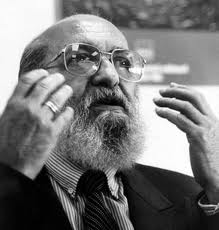
"Education either functions as an instrument which is used to facilitate integration of the younger generation into the logic of the present system and bring about conformity or it becomes the practice of freedom, the means by which men and women deal critically and creatively with reality and discover how to participate in the transformation of their world." — Paulo Freire (Pedagogy of the Oppressed)
I believe that education is the practice of freedom. The problem is that school is so often confused with education. School accomplishes the first part of the above quotation. It re-inforces the present and preserves the status quo. School is almost propaganda for the status quo. Education and learning come from the truth around you. Empowerment comes from the self discovery of that truth. We must all become self learners and self teachers with those around us. Learning liberates the spirit!!
"We should all be judged by what we do to empower other people."
-Bill Clinton 2010
Friday, December 24, 2010
Ivan Illich--revisit him

Many students, especially those who are poor, intuitively know what the schools do for them. They school them to confuse process and substance. Once these become blurred, a new logic is assumed: the more treatment there is, the better are the results; or, escalation leads to success. The pupil is thereby "schooled" to confuse teaching with learning, grade advancement with education, a diploma with competence, and fluency with the ability to say something new. His imagination is "schooled" to accept service in place of value. Medical treatment is mistaken for health care, social work for the improvement of community life, police protection for safety, military poise for national security, the rat race for productive work. Health, learning, dignity, independence, and creative endeavour are defined as little more than the performance of the institutions which claim to serve these ends, and their improvement is made to depend on allocating more resources to the management of hospitals, schools, and other agencies in question. Ivan Illich Deschooling Society (1973: 9)
Thursday, December 23, 2010
New Literacies
I hope that you enjoy this video. It looks pretty good from my stool! Please comment on it.
Wednesday, December 22, 2010
Government needs a Warrant to read EMail
The 6th US Circuit Court of Appeals ruled yesterday in US vs Warshak that the government needs a warrant to compell an ISP to turn over email to the government.
See the entire EFF article for all of the details.
Given the fundamental similarities between email and traditional forms of communication [like postal mail and telephone calls], it would defy common sense to afford emails lesser Fourth Amendment protection.... It follows that email requires strong protection under the Fourth Amendment; otherwise the Fourth Amendment would prove an ineffective guardian of private communication, an essential purpose it has long been recognized to serve.... [T]he police may not storm the post office and intercept a letter, and they are likewise forbidden from using the phone system to make a clandestine recording of a telephone call--unless they get a warrant, that is. It only stands to reason that, if government agents compel an ISP to surrender the contents of a subscriber's emails, those agents have thereby conducted a Fourth Amendment search, which necessitates compliance with the warrant requirement
See the entire EFF article for all of the details.
Wednesday, December 15, 2010
EFF News
In a decision issued yesterday, the Sixth Circuit Court of Appeals ruled that the government must have a search warrant before it can seize and search emails stored by third party email service providers. Closely tracking arguments made by EFF in our amicus brief, the court found that email users have the same reasonable expectation of privacy in their stored email as they do in their phone calls and postal mail.
And today, the Third Circuit Court of Appeals agreed with EFF and refused the government's request to reconsider an earlier pro-privacy decision, which held that federal magistrates have the discretion to require the government to get a search warrant based on probable cause before obtaining cell phone location records. That decision, based on EFF's briefing and oral argument as a friend of the court, has implications far beyond cell phone location privacy. It could apply to a broad range of communications records - including the content of your emails, your web search or browsing histories, as well as the location of your phone
Sunday, December 12, 2010
Congressman Hoyer's response to previous Post
Dear Mr. Constantine,
Thank you for contacting me to share your views on S. 3804, the Combating Online Infringement and Counterfeits Act. I certainly appreciate your taking the time to make me aware of your concerns about this legislation.
S. 3804 would give the Justice Department an expedited process to crack down on websites that offer counterfeit materials or infringe on copyrighted content by offering the content without the consent of the copyright owner. The legislation would aim to regulate the distribution of copyrighted works and fight against online piracy. S. 3804 was introduced in the Senate by Senator Patrick Leahy of Vermont on September 20, 2010, and was referred to the Senate Judiciary Committee. You may be sure that I will keep your concerns in mind should this legislation be considered by the House of Representatives.
Thank you again for sharing your thoughts with me. I encourage you to visit my website at www.hoyer.house.gov. While there, you can sign up for the Hoyer Herald, access my voting record, and get information about important public issues. If I can be of further assistance, please do not hesitate to contact me.
With kindest regards, I am
Sincerely yours,
Steny Hoyer
Thank you for contacting me to share your views on S. 3804, the Combating Online Infringement and Counterfeits Act. I certainly appreciate your taking the time to make me aware of your concerns about this legislation.
S. 3804 would give the Justice Department an expedited process to crack down on websites that offer counterfeit materials or infringe on copyrighted content by offering the content without the consent of the copyright owner. The legislation would aim to regulate the distribution of copyrighted works and fight against online piracy. S. 3804 was introduced in the Senate by Senator Patrick Leahy of Vermont on September 20, 2010, and was referred to the Senate Judiciary Committee. You may be sure that I will keep your concerns in mind should this legislation be considered by the House of Representatives.
Thank you again for sharing your thoughts with me. I encourage you to visit my website at www.hoyer.house.gov. While there, you can sign up for the Hoyer Herald, access my voting record, and get information about important public issues. If I can be of further assistance, please do not hesitate to contact me.
With kindest regards, I am
Sincerely yours,
Steny Hoyer
Saturday, December 04, 2010
Combating Online Infringement and Counterfeits Act

There is a bill before the Congress of the United States which threatens to stiffle even further the free spread of information across the Internet. The Electronic Frontier Foundation has come out against the Bill and I believe that this bill needs to be defeated. I urge you to write to your member of Congress and U.S. Senators urging the defeat of this bill.
Thursday, December 02, 2010
New PodCast Fron Zach and Irbs......
Here is another podcast from two students at the Wakefield School in The Plains Va. This pcast appears weekly in the school's digital newspaper.
Tuesday, November 30, 2010
An Edublog Nomination
I have decided to make a few nominations to the Edublog Blog Awards. I have always wanted to do this and so today I am.
Here are my nominations to the Edublog Blogging Nominations in the the following catagories.
Best individual blog Dangerously Irrelevant
Best individual tweeter Shelly Blake-Plock
Best teacher blog TeachPaperless by Shelly Blake-Plock
Best librarian / library blog The Unquiet Librarian by Buffy Hamilton
Best school administrator blog The Art of Education by Troy P. Roddy PhD
Best educational wiki FlatClassroom Project
The Best use of a PLN George Siemans
Lifetime achievement Steven Downes
Here are my nominations to the Edublog Blogging Nominations in the the following catagories.
Best individual blog Dangerously Irrelevant
Best individual tweeter Shelly Blake-Plock
Best teacher blog TeachPaperless by Shelly Blake-Plock
Best librarian / library blog The Unquiet Librarian by Buffy Hamilton
Best school administrator blog The Art of Education by Troy P. Roddy PhD
Best educational wiki FlatClassroom Project
The Best use of a PLN George Siemans
Lifetime achievement Steven Downes
Sunday, November 28, 2010
Monday, November 08, 2010

Sunday, November 07, 2010


Thursday, October 28, 2010
Tuesday, October 19, 2010
A Guest Blog--

Kourtnee’s Korner: Bathroom Etiquette
Proper Bathroom Etiquette Rules. Rule 1: Place a toilet seat cover or toilet paper on the seat. Rule 2: Squat or sit, whatever floats your boat. Rule 3: Do your business. Rule 4: Clean up. Rule 5: If you leave anything on the toilet seat CLEAN IT UP!!! Rule 6: FLUSH the toilet. Rule 7: Courtesy flush. I am tired of walking into the bathroom and all of the stalls are unusable, when I really have to go. I have to take time, which I really don’t want to waste, to clean up after someone else. We are all old enough to know how to use the bathroom properly and how to clean up after ourselves, so DO IT!! How hard is it to clean up after yourselves?
Thursday, September 23, 2010
Wednesday, September 22, 2010
Tuesday, August 24, 2010
The day the music lived..........
 Conor Malone and Robert came back to Nanny O'Brien's on a Saturday night this summer and on that night the music lived...the old Nanny's lived. The Guiness just tasted better! The battery was low on the IPhone so I didnt get a lot of music but here is a clip that unfortunately had Connor replacing a string. Still you have to love the fiddle!
A word from John Jay
I believe that the idea that the writers of the constitution would be in the Tea Party camp in contemporary American Politics is false. The convention of 1787 came together to reduce the power of the states in favor of a national government. There may have been some discussion about the exact nature of the national government, but there can be little argument, in my view, that they wished to establish a government that would dominate the states. In Federalist #2 John Jay writes:
I do not believe that Jay, Hamilton or Madison would be at all upset at how thing turned out!
Nothing is more certain than the indispensable necessity of government, and it is equally undeniable, that whenever and however it is instituted, the people must cede to it some of their natural rights in order to vest it with requisite powers. It is well worthy of consideration therefore, whether it would conduce more to the interest of the people of America that they should, to all general purposes, be one nation, under one federal government, or that they should divide themselves into separate confederacies, and give to the head of each the same kind of powers which they are advised to place in one national government
I do not believe that Jay, Hamilton or Madison would be at all upset at how thing turned out!
Saturday, August 14, 2010
Saturday, July 03, 2010


Thursday, July 01, 2010
Tuesday, June 29, 2010
PG County Blues at the Zoo Bar
Another great night at the Zoo bar after eating Cod Head and several other interesting courses at a Korean Resturant in Alexandria on Duke Street.
Sunday, June 20, 2010
Saturday, June 19, 2010
Marc Prensky talks......
I have been very engaged with the work of Marc Prensky since I read Digital Game Based Learning a few years ago. Here is great interview with Prensky which highlights the core values of his thought over the years. He is much more accomodating to other viewpoints now a days without retreating from his positions. A kinder, smoother Marc........
Thursday, June 17, 2010
Monday, June 07, 2010
A Yeats Poem
An Irish Airman Foresees His Death
by William Butler Yeats
I know that I shall meet my fate
Somewhere among the clouds above;
Those that I fight I do not hate,
Those that I guard I do not love;
My country is Kiltartan Cross,
My countrymen Kiltartan's poor,
No likely end could bring them loss
Or leave them happier than before.
Nor law, nor duty bade me fight,
Nor public men, nor cheering crowds,
A lonely impulse of delight
Drove to this tumult in the clouds;
I balanced all, brought all to mind,
The years to come seemed waste of breath,
A waste of breath the years behind
In balance with this life, this death.
by William Butler Yeats
I know that I shall meet my fate
Somewhere among the clouds above;
Those that I fight I do not hate,
Those that I guard I do not love;
My country is Kiltartan Cross,
My countrymen Kiltartan's poor,
No likely end could bring them loss
Or leave them happier than before.
Nor law, nor duty bade me fight,
Nor public men, nor cheering crowds,
A lonely impulse of delight
Drove to this tumult in the clouds;
I balanced all, brought all to mind,
The years to come seemed waste of breath,
A waste of breath the years behind
In balance with this life, this death.
Saturday, May 29, 2010
Monday, May 17, 2010
Friday Night at the Zoo Bar

On Friday night, driving home from work I decided to call my friend Paddy and see if he wanted to go out and have a few beers. I liked this blog a lot more when Paddy actually contributed to it but he has become rather existential of late, and longs to leave this modern madness for the wilds of Alaska. As much as Paddy talks about 2 foot trout and salmon he still enjoys an imperial pint of Guiness, so we treked off to the Zoo Bar across from the Connecticut Street Zoo in Washington, DC. The Zoo Bar has some of the best blues music that I have ever heard. It harkens back to my college days when I frequented the Bueno Vista Cafe on Hertle Avenue in Buffalo, New York.
The Zoo Bar is a throwback, of that there is no question. It is full of older folks like me who are gray at more than the temples. Those folks however are real characters with genuine life experiences. I tip my hat to Cliff and his lady friend who I met at the bar and engaged in real conversation with.
The second Friday of the Month the Sookey Blues Band fills the Zoo Bar with extraordinary delta blues and coastal rock and roll. I try to get to the Zoo every time they play. I was driving home this Friday but somehow I made it to my stool at the long wooden bar across from the zoo. It was so worth it. Though they seldom play country, SBB banged out a wonderful rendition of Orange Blossom Special which is still ringing in my ears.
Though the sound is not the best (I was too close to the band) here is that song. Friday night I was in "the zone" at the Zoo Bar. Make it out there whenever you can.
Monday, May 03, 2010
History Matters
On another web site (Teachpaperless) I am involved in a discussion that centers around the idea of the internet as our repository of facts and memorization. The discussion centers around whether or not prior knowledge is internal or external. A commenter brought up William Jennings Bryan's 1896 Cross of Gold speech to the Democratic convention. He referred to its bibical allusions and remarked that you could not look those up on the internet unless you knew the bible.
 That reminded me of an Declaimatory oratory contest that I was in at Canisius High School in Buffalo, New York where I declaimed Jennings Bryan's speech. Though this recording of the speech by Bryan himself existed in 1968 I never listened to it because I did not know about it or found it in my research on the speech. I found it in 30 seconds with an internet search. That is power. That is why history matters!! Read the speech and listen to the recording. It connects you in ways that memorization cannot.
 That reminded me of an Declaimatory oratory contest that I was in at Canisius High School in Buffalo, New York where I declaimed Jennings Bryan's speech. Though this recording of the speech by Bryan himself existed in 1968 I never listened to it because I did not know about it or found it in my research on the speech. I found it in 30 seconds with an internet search. That is power. That is why history matters!! Read the speech and listen to the recording. It connects you in ways that memorization cannot.
Sunday, March 28, 2010
Tom Dew's Singing away................
My friend and former colleague at STA singing on YouTube.....
Wednesday, March 17, 2010
Happy St Patricks Day--And a Ted Talk by Jane McGonigal
Wish I was in a pub listening to this right now.....ah for the old Nanny's!!
Here is a wonderful talk by Dr. Jane McGonigal about the power of gaming.
Here is a wonderful talk by Dr. Jane McGonigal about the power of gaming.
Sunday, March 14, 2010
Sookey Blues Band at the Zoo Bar
I love the Sookey Jump Blues Band and the Zoo Bar in Washington DC.
Here is another Zoo Bar regular band, Big Boy Little.
Here is another Big Boy song.
Conrad Oberg at the Zoo Bar
Here is another Zoo Bar regular band, Big Boy Little.
Here is another Big Boy song.
Conrad Oberg at the Zoo Bar
Sunday, February 14, 2010
Another idea becomes reality---by someone else.
Many years ago I imagined taking a trip across Russia traveling from St. Petersburg to Vladivostok on the Siberian coast on the Trans Siberian railroad. The Trans Siberian Railway actually runs from Moscow to Vladivistok. My dream had me getting off the train where ever I felt like and meeting the local residents and playing chess at the local chess club. I also thought I would record the entire trip over the Internet before it was fashionable to do such things. People thought I was crazy. I actually started learning Russian, but like so many ideas I have, I never really did anything about it. To be honest I was afraid.
Well, Google has done it. Check out the following link: Virtual Tour on the Trans Siberian railroad. Though the chess is missing the railroad trip is here. Enjoy!
Here is a segment:
Bobby Fisher playing at the Moscow Central Chess Club in 1957

Well, Google has done it. Check out the following link: Virtual Tour on the Trans Siberian railroad. Though the chess is missing the railroad trip is here. Enjoy!
Here is a segment:
Bobby Fisher playing at the Moscow Central Chess Club in 1957

Thursday, February 04, 2010
NSA and Google together--Scary!!
This is scary. It was reported today in the Washington Post that NSA and Google are joining forces to fight cyberterrorism and industrial espionage.
I find it very difficult to understand how NSA could do this at all without having access to the Google servers and search files. In order to find something you have to have access to the area where it is taking place. Given that idea I find the following lines in the Post hard to believe.
We made a mistake after 911 by allowing NSA to begin spying on Americans without warrants. In my view, we are now compounding this error by not screaming bloody murder about this potential alliance between Google and NSA. As written in the Post,
I am not sure it can be overseen. Call in next Tuesday and let me know.
========================================================================
On another issue. We will be asking the question Is Internet access a civil right? This question was raised in a blog I read, and recommend to everyone called TeachPaperless. Teachpaperless believes that Internet access is a civil right and makes a solid case for it. We will talk about this on NormAtNite for 15 minutes on Tuesday also.
The world's largest Internet search company and the world's most powerful electronic surveillance organization are teaming up in the name of cybersecurity.
I find it very difficult to understand how NSA could do this at all without having access to the Google servers and search files. In order to find something you have to have access to the area where it is taking place. Given that idea I find the following lines in the Post hard to believe.
the alliance is being designed to allow the two organizations to share critical information without violating Google's policies or laws that protect the privacy of Americans' online communications. The sources said the deal does not mean the NSA will be viewing users' searches or e-mail accounts or that Google will be sharing proprietary data.I do not think that this is a good idea for the privacy of the American people and is just another attempt by the NSA to use fear to gain another entry point into the lives and thoughts of Americans. I mean why is it any less outrageous for American spy agencies to have access to Google files than it is for Chinese spy agencies to try to examine them to search for dissidents. Does anyone think that the NSA will not examine those same files for intelligence on those same dissidents and on American dissidents? I will be talking about these issues on NormAtNite next Tuesday night. Tune in if you have ideas on this issue.
We made a mistake after 911 by allowing NSA to begin spying on Americans without warrants. In my view, we are now compounding this error by not screaming bloody murder about this potential alliance between Google and NSA. As written in the Post,
But achieving collaboration is not easy, in part because private companies do not trust the government to keep their secrets and in part because of concerns that collaboration can lead to continuous government monitoring of private communications. Privacy advocates, concerned about a repeat of the NSA's warrantless interception of Americans' phone calls and e-mails after the Sept. 11, 2001, terrorist attacks, say information-sharing must be limited and closely overseen.
I am not sure it can be overseen. Call in next Tuesday and let me know.
========================================================================
On another issue. We will be asking the question Is Internet access a civil right? This question was raised in a blog I read, and recommend to everyone called TeachPaperless. Teachpaperless believes that Internet access is a civil right and makes a solid case for it. We will talk about this on NormAtNite for 15 minutes on Tuesday also.
Thursday, November 12, 2009
An Animoto Video Experiment
I created this ANIMOTO video 5 minutes after I went on the site for the first time. I like the tool a lot.
Tuesday, November 10, 2009
Virginia kills this man at 9:00 pm

The Commonwealth of Virginia will kill John Allen Mohammed at 9:00 PM this evening finally fulfilling our blood lust for him. Once he takes his last breath we will never be able to try and figure out why he did what he did and learn something about ourselves that may help us prevent a rampage like his in the future. What possesses a human being to do what he did? We will never know now....and our blood lust will be satieated. Where are all of the Pro-Lifers tonite? Maybe Mohammed's mother should have just aborted him....now the state is taking over and aborting his life. Maybe everyone he killed will come back to life when he breaths his last.
Wednesday, November 04, 2009
Virginia steps back in time....

Congrats to Bob McDonnell. He carried Virginia handily in yesterday's election. He also made me very happy that my daughters live in Maryland where their contributions to society will be expected to be more than working in the kitchen and taking care of the family. I hope everyone thinks back 20 years and considers what made up the basic fabric of your thought.
If you are a woman who is working outside of the "Home" Mr.McDonnell expects you to turn in your notice and move back into the house. I hope everyone does it slowly so you can be replaced gradually with all of those unemployed men. Thanksgiving dinner in the Commonwealth should be much better this year with all of the women back in the kitchen safeguarding family values. Heck, why do women even need to vote? Pass the squash please!
Friday, October 23, 2009
Make An Alternate Reality Game!
Check out this SlideShare Presentation:
Make An Alternate Reality Game!
View more presentations from avantgame.
Saturday, September 12, 2009
What is left of the Flag for me
A bit of Flogging Molly to pick up your spirits as school begins.......
Saturday, August 29, 2009
The Buffalo Brand.....

Buffalo, New York is a very unique place. Though I have lived almost 2/3 of my life away from that "city on the lake" I spent the first 20 years of life, including college, in that wonderful incubator of life and was forever branded by that city. Chicken wings, beef on 'wick, Salhens hot dogs, Weber's mustard, and the Elmwood Strip have all played a huge formative role for me.
I hope this video from the Buffalo News helps you to understand why we all believe that hell will freeze over and the Bills will win the Super Bowl.

The Buffalo Brand
Wednesday, August 19, 2009
Congrats

A dear and close friend of Paddy and the Wop celebrated his wedding on Saturday, August 15, 2009 and we wish Chris and his bride Kathleen the best that the world has to offer. Paddy and I could not be at the Wedding in person but we were surely there in spirit. Chris and Kathleen, we love you, and wish you a long and happy life.
An Old Irish Proverb
"Don't walk in front of me, I may not follow.
Don't walk behind me, I may not lead.
Walk beside me and just be my friend."
Friday, August 14, 2009
A blog worth reading
An old student from my days at "Hogworth" is writing a blog that is worth reading. His name is Brian and you can link to the The Spliced Travels right from here. It offers a wonderful perspective on Asia from a western point of view. Recommended!!!
Monday, July 27, 2009
A Health Care video
Paddy is in Alaska for a month. I miss his views on every topic I voice an opinion on. He keeps me grounded in reality.
I had a great show last week on Health Care. I found this video on The Economist web site that I think explains a lot of the issues that we face with Health Care. While I do not always agree with answers indicated, I do think that this is a great framework for discussion.
I had a great show last week on Health Care. I found this video on The Economist web site that I think explains a lot of the issues that we face with Health Care. While I do not always agree with answers indicated, I do think that this is a great framework for discussion.
Wednesday, July 08, 2009
Monday, July 06, 2009
Thorns
I was reading a Blog post by an Irish priest friend of mine (Wish he was Italian :) ) and the following passage made me think of this Blog.
We all have thorns in our life. Think about yours.
You can read the entire post by Father Andy at Reflections by the Bay
Listen to the tone of these words from James Joyce from Dubliners – words where he mentions barren thorns, “Snow was general all over Ireland. It was falling on every part of the dark central plain, on the treeless hills, falling softly upon the Bog of Allen and, farther westward, softly falling into the dark mutinous Shannon waves. It was falling, too, upon every part of the lonely churchyard on the hill where Michael Furey lay buried. It lay thickly drifted on the crooked crosses and headstones, on the spears of the little gate, on the barren thorns. His soul swooned slowly as he heard the snow falling faintly through the universe and faintly falling, like the descent of their last end, upon all the living and the dead.” [“The Dead,” from Dubliners 1916].
We all have thorns in our life. Think about yours.
You can read the entire post by Father Andy at Reflections by the Bay
Sunday, June 21, 2009
This chart appeared in a Wired Article and I thought I would post it here. It is an interesting perspective that deserves consideration. The entire article can be found at Wired.com
Socialism:
A History
1516 Thomas More's Utopia
1794 Thomas Paine's The Age of Reason
1825 First US commune
1848 Marx & Engels' The Communist Manifesto
1864 International Workingmen's Association
1903 Bolshevik Party elects Lenin
1917 Russian Revolution
1922 Stalin consolidates power
1946 State-run health care in Saskatchewan
1959 Cuban Revolution
1967 Che Guevara executed
1973 Salvador Allende deposed
1980 Usenet
1985 Mikhail Gorbachev's glasnost
1991 Soviet Union dissolves
1994 Linux 1.0
1998 Venezuela elects Hugo Chavez
1999 Blogger.com
2000 Google: 1 billion indexed pages
2001 Wikipedia
2002 Brazil elects Lula da Silva
2003 Public Library of Science
2004 Digg
2005 Amazon's Mechanical Turk
2006 Twitter
2008 Facebook: 100 million users
2008 US allocates $700 billion for troubled mortgage assets
2009 YouTube: 100 million monthly US users
Is the Internet the beginning of the distingration of the state? Comment if you wish.
Socialism:
A History
1516 Thomas More's Utopia
1794 Thomas Paine's The Age of Reason
1825 First US commune
1848 Marx & Engels' The Communist Manifesto
1864 International Workingmen's Association
1903 Bolshevik Party elects Lenin
1917 Russian Revolution
1922 Stalin consolidates power
1946 State-run health care in Saskatchewan
1959 Cuban Revolution
1967 Che Guevara executed
1973 Salvador Allende deposed
1980 Usenet
1985 Mikhail Gorbachev's glasnost
1991 Soviet Union dissolves
1994 Linux 1.0
1998 Venezuela elects Hugo Chavez
1999 Blogger.com
2000 Google: 1 billion indexed pages
2001 Wikipedia
2002 Brazil elects Lula da Silva
2003 Public Library of Science
2004 Digg
2005 Amazon's Mechanical Turk
2006 Twitter
2008 Facebook: 100 million users
2008 US allocates $700 billion for troubled mortgage assets
2009 YouTube: 100 million monthly US users
Is the Internet the beginning of the distingration of the state? Comment if you wish.
Tuesday, June 02, 2009
 The Leopard by Giuseppe Tomasi di Lampedusa
My review
rating: 3 of 5 starsThis is, first and foremost, a beautifully written story. What Dickens achieves by his wonderful descriptions of the grim, dilapidation of an over-crowded and underfed Victorian London, Lampedusa attains by invoking the sun-drenched hills of Sicily. But whereas Dickens excels at setting his scenes visually, Lampadusa works all the senses, using touch, taste and smell, especially smell, to conjure up incredibly powerful and sensual scenes. The consumption of a macaroni pie around an evening's formal dinner table, for example, becomes the vehicle for revealing the interior world, social status, emotional desire, and even the sexual appetite of his characters: "Tancredi, in an attempt to link gallantry with greed, tried to imagine himself tasting, in the aromatic forkfuls, the kisses of his neighbour Angelica, but he realized at once that the experiment was disgusting and suspended it, with a mental reserve about reviving this fantasy with the pudding." Lampadusa has produced a tidy story, expressed in exceptionally accomplished prose, of a noble Sicilian family in decline, left behind on history's dust-heap as it were. But beyond the scented scenes and crinolined coquettes, there is little but nostalgia and an undercurrent of bitterness (the scent of defecation and the sour taste of vomit recur throughout) to take away. Depth comes from the author's supreme unease with modernity itself, with the ill-mannered, the uncultured, with foreigners, and even with the concept of a united Italy, dominated, of course, by Northerners. 'The Leopard' is evocative to be sure and quite enjoyable, but lacks a certain gravitas to merit 'great book' status.
View all my reviews.
Saturday, May 09, 2009
 The "Hitler Myth": Image and Reality in the Third Reich by Ian Kershaw
My review
For those Catholic-bashers out there, Kershaw points out that Catholic leadership vocally resisted Nazi doctrine and openly attacked Hitler as "the incarnation of evil". For their efforts, heroic resistors such as Dr. Fritz Gerlich and Fr. Ingbert Naab were murdered or sent to the concentration camps. There exists, especially in the United States, a popular misconception that the Holocaust was the product of 'good people doing nothing'. Many good people did stand up to the Nazis and paid for it with their lives. History is rarely as simplistic, and moral, as most would have it. The good people of history are all too often pushed aside or eliminated by the mass of idiots. Kershaw shows how relentless Nazi propaganda, with a complete monopoly of media control after 1933, converted the good to idiocy. Few 'good people' existed. however, to raise their voices against the murder and extermination of German Communists, who went to the concentration camps two years before the passing of the Nuremberg Laws against German Jews.View all my reviews.
Tuesday, April 21, 2009
Sunday, March 22, 2009
An Irish Blessing....
I found this on a blog I helped a friend start.....
===================================================
===================================================
IRISH BLESSING # 67
Today
may you hear a song inside your mind,
may you feel a dance in your step,
may you have a smile on your face,
may good words flow out of your mouth,
and may generosity jump out of your wallet.
Amen!
Saturday, March 21, 2009
Tuesday, March 17, 2009
Happy St. Patrick's Day
We hope everyone has a safe and happy St. Patrick's Day. I will never forget St, Paddy's Day at Nanny's--when it was still Nanny's.
Friday, March 13, 2009
News from the Midwest
I realize I've fallen off for a while, but as winter quarter winds down at the University of Chicago, I find myself with a bit more time and clarity, and so I turn first to paddywop.
Before I go any further, I thought readers would enjoy a NYT piece on something close to all our hearts: http://www.nytimes.com/2009/03/11/dining/11pubs.html?ref=style
Its not exactly breaking news for most of us, but it gives a voice to the phenomenon that has rocked nanny's and many other formerly enjoyable irish pubs.
Second, I'd like to chime in on Obama. Its been nearly two months since his term began and, as a representative of one of the most fervently Obama-supportive demographics in the country, I think a few points are worth making. First, from the day he took office, its been evident that 24 hour news programs, popular news publications, and even legitimate academic works have been scrambling (now less and less) to find ways to criticize the man. Foreign Policy's January/February edition titled, "Yes he did, but what if he can't" symbolizes what I have felt to be a beltway translation of the sentiment: "I want to elect the black man because I don't want to be a racist, but lets doubt his abilities at every step of the way." The problem here, for me at least, is not that these groups have sought to criticize Obama. In fact, I think more criticism is needed if he is going to make a substantial difference as president. But to question his ability seems to avoid the problems that still seems too touchy for mainstream america to confront, but are the ones that stand in the way of an improved US. If any one can deal with problems of massive debt, improving one's image in a community of wary dissenters, and cleaning up the mess of an ignorant white man, it should be Obama.
The other strain of dissent, one I am beginning to sympathize with, is that his optimism is getting in the way of making progress from the Bush years. In attempting to win republican support for economic measures, this guy has relaxed all of his campaign promises: from human rights stances, to military agendas, and across the litany of domestic issues that he campaigned so strongly for. Frankly, the sentiment that I'm picking up on is that this guy is listening to too many sources, too many requests, and is trying to appease too many different opinions. This is a huge problem. America is an intensely diverse country, only getting more diverse, and as a result it will become harder and harder to identify what a certain frenchman once deemed the "volonte generale." Bush did a spectacular job of confronting this problem, simply by not giving a shit. Obama seems to have appealed to some distorted Hegelian sense of improvement by embracing the polar opposite of Bush neglect, and as a result seems dragged down by a bloated forum of opinion. If any lessons are to be taken from the Bush administration, it is that the executive office can be made as powerful as it wants. Bush rewrote executive authority laws, manipulated the entire government to support his agenda, despite broad national opposition, and probably never lost a minute of sleep over it. Obama needs to forget about the image he created for himself over the last two years of campaigning, accept a few enemies, but deliver on the promises he made during the campaign, with the same type of conviction that we saw in Bush. Conviction and fortitude should not be equated (or inherently linked) with ignorance and insensitivity. Bush made this equation easy, but it does not need to be the case. If Obama continues to flop around on all the issues he seemed so sure about 3 months ago, I and my peers will be sorely disappointed. While his hyper-sensitivity is a safe move following the bush years, nothing will be worse for america than four years of an indecisive leader. I haven't written this one off, but simply noticed a few initial gestures that make this trend seem like a distinct possibility.
Finally, on a far less controversial note, I will not be returning to DC for a while: flying home for a week doesn't make as much sense anymore, given the price of flights and the tanking economy. As a result, two of my good friends and I will be spending spring break in the solitude of the Ozark mountains in southern Missouri. At heart, these two guys are certainly of Hibee quality, but in planning for the trip I had to introduce them to the necessity of Edgar Allen Poe, burning effigies, and consistently referencing pumpkin head without contextual basis. They seem positively inclined to the new measures, so I'm definitely looking forward to a great trip. Expect pictures.
Before I go any further, I thought readers would enjoy a NYT piece on something close to all our hearts: http://www.nytimes.com/2009/03/11/dining/11pubs.html?ref=style
Its not exactly breaking news for most of us, but it gives a voice to the phenomenon that has rocked nanny's and many other formerly enjoyable irish pubs.
Second, I'd like to chime in on Obama. Its been nearly two months since his term began and, as a representative of one of the most fervently Obama-supportive demographics in the country, I think a few points are worth making. First, from the day he took office, its been evident that 24 hour news programs, popular news publications, and even legitimate academic works have been scrambling (now less and less) to find ways to criticize the man. Foreign Policy's January/February edition titled, "Yes he did, but what if he can't" symbolizes what I have felt to be a beltway translation of the sentiment: "I want to elect the black man because I don't want to be a racist, but lets doubt his abilities at every step of the way." The problem here, for me at least, is not that these groups have sought to criticize Obama. In fact, I think more criticism is needed if he is going to make a substantial difference as president. But to question his ability seems to avoid the problems that still seems too touchy for mainstream america to confront, but are the ones that stand in the way of an improved US. If any one can deal with problems of massive debt, improving one's image in a community of wary dissenters, and cleaning up the mess of an ignorant white man, it should be Obama.
The other strain of dissent, one I am beginning to sympathize with, is that his optimism is getting in the way of making progress from the Bush years. In attempting to win republican support for economic measures, this guy has relaxed all of his campaign promises: from human rights stances, to military agendas, and across the litany of domestic issues that he campaigned so strongly for. Frankly, the sentiment that I'm picking up on is that this guy is listening to too many sources, too many requests, and is trying to appease too many different opinions. This is a huge problem. America is an intensely diverse country, only getting more diverse, and as a result it will become harder and harder to identify what a certain frenchman once deemed the "volonte generale." Bush did a spectacular job of confronting this problem, simply by not giving a shit. Obama seems to have appealed to some distorted Hegelian sense of improvement by embracing the polar opposite of Bush neglect, and as a result seems dragged down by a bloated forum of opinion. If any lessons are to be taken from the Bush administration, it is that the executive office can be made as powerful as it wants. Bush rewrote executive authority laws, manipulated the entire government to support his agenda, despite broad national opposition, and probably never lost a minute of sleep over it. Obama needs to forget about the image he created for himself over the last two years of campaigning, accept a few enemies, but deliver on the promises he made during the campaign, with the same type of conviction that we saw in Bush. Conviction and fortitude should not be equated (or inherently linked) with ignorance and insensitivity. Bush made this equation easy, but it does not need to be the case. If Obama continues to flop around on all the issues he seemed so sure about 3 months ago, I and my peers will be sorely disappointed. While his hyper-sensitivity is a safe move following the bush years, nothing will be worse for america than four years of an indecisive leader. I haven't written this one off, but simply noticed a few initial gestures that make this trend seem like a distinct possibility.
Finally, on a far less controversial note, I will not be returning to DC for a while: flying home for a week doesn't make as much sense anymore, given the price of flights and the tanking economy. As a result, two of my good friends and I will be spending spring break in the solitude of the Ozark mountains in southern Missouri. At heart, these two guys are certainly of Hibee quality, but in planning for the trip I had to introduce them to the necessity of Edgar Allen Poe, burning effigies, and consistently referencing pumpkin head without contextual basis. They seem positively inclined to the new measures, so I'm definitely looking forward to a great trip. Expect pictures.
Subscribe to:
Posts (Atom)