The top 1 percent have the best houses, the best educations, the best doctors, and the best lifestyles, but there is one thing that money doesn’t seem to have bought: an understanding that their fate is bound up with how the other 99 percent live. Throughout history, this is something that the top 1 percent eventually do learn. Too late. -Joseph Stiglitz Vanity Fair

You are on a stool with a Catholic guy looking at the world through ethnic eyes.
Saturday, April 02, 2011
How do I affect this........


Saturday, March 19, 2011

Saturday, February 19, 2011
Games-Can they be good for us?

I am a gamer. Playing games is an intregal part of who I am. Playing games is a good thing. I can remember sitting on Paul Filbert's front porch in the summer time and playing Avalon Hill war games or Rummy Royale. I can remember playing chess in Hankie Pauley's kitchen on Friday nights with the glorius wooden chess he brought back from his trip to Mexico. I can remember the giant Risk tournaments we played over entire weekends. Joey Chachulski usually won them. I can remember designing lionel railroad empires in Jeffery Pyzinski's basement or creating rockets out empty CO2 cartridges and launching them filled with matchheads for solid fuel and soldered on sheet metal wings for guidance. Kermit Avenue had the best young Diplomacy players in Buffalo, New York I am sure! Our imaginations raced with new ideas and expanding horizons all of the time. We were not stressed, we did not feel depressed at all. We empowered ourselves.
Games are good for us. They empower us. A recent book by Dr. Jane McGonagal, Reality is Broken , has opened my mind to all types of new ideas, particularly the new science of happiness and the concepts of flow and fiero. Games produce flow and fiero. It makes for great reading and spurs ideas.

Couple Reality is Broken with Johann Huzinga's brilliant Homo Ludens and you will gain new insight into human nature.
Video games also may help us to cope with the crazy world that speeds up every day and infuses us with great anxiety and depression. A research study from the East Carolina University cited the following statistics about human beings in this world we live in from the National Institute of Mental Health:
According to the National Institute of Mental Health in the United States an estimated 20.9 million American adults (9.5% of the U.S. population age 18 or older) suffers from a mood disorder, and more than two thirds of those (14.8 million U.S. adults) are cases of major depression. Depression is the leading cause of disability in the U.S. for people aged 15 to 44. Depressive disorders often co-occur with anxiety disorders, and approximately 40 million American adults (about 18 percent of all U.S. adults) have an anxiety disorder.
The study then when on to explore what effect playing video games has on subjects such as those refereneced above. Playing games like Bejeweled, Bookworm, and Peegle from Popcap games significantly reduced depression, stress and anxiety levels in the study groups. All of these games are free by the way and blocked by most school web

filters. I play all of these games and am particularly drawn to them after particularly stressful days at work or when I am feeling overwhelmed by my task and to-do lists. The results of the study are quite startling and deserve to be studied and applied in our schools.Video Games Can Reduce Depression And Anxiety - Study
should be read by every teacher in America.
Wednesday, February 09, 2011
O Say Can You Drink
I always knew that the tune of the Star Spangled Banner was a remix from an old english tavern song but I have never heard it before until a friend sent me this...
Tuesday, January 25, 2011
Sunday, January 23, 2011
American Uprising-A Review
Following is a review of Dan Rasmussen's American Uprising The review was written by Dr. Robert Shurmer and appeared in Googreads. Rasmussen is a former student of mine, and Dr. Shurmer is a former colleague.
Acclaimed historian of colonial America, Jack P. Green, has called the South “a negative example of what America had to overcome before it could finally realize its true self.” For two centuries, the struggle to 'integrate' the South into a more 'progressive' and 'mainstream' American narrative has flummoxed scholars, politicians, and cultural theorists of all shades. The South still tends to confound those who are not a part of it. Dan Rasmussen’s new book American Uprising perhaps adds another strut to Greene’s argument by providing a glimpse into the complex, and problematic, relationships among slaves, landholders, merchants, politicians, soldiers, privateers, and rogues of every shade and political allegiance in the steamy swamplands of Louisiana during the early years of the American Republic. The story Dan tells is ostensibly about a little-known, but substantial slave revolt in 1811 that occurred on the Andry Plantation located on Louisiana's German Coast forty miles north of New Orleans. The insurrection that marched on New Orleans that year may have included up to five hundred slaves (actual numbers are disputed), but broke up fifteen miles from the city when it came up against a smaller, but better armed, force of planter militia. While the enduring impact of this particular uprising remains debatable, Rasmussen’s narrative provides the fodder for a much deeper story about the ‘Americanization’ of the Deep South.
Rasmussen possesses a knack for conjuring up the sights, sounds, colors, and flavors of early 19th-century New Orleans and placing his readers at the side of his protagonists, both planter and slave. The slave experience takes center stage here as Rasmussen attempts to piece together the world inhabited by the West Africans Kook and Quamana, the primary organizers of the uprising. From their arrival in the port of New Orleans in 1806 with some 1500 other slaves to their executions following the failed uprising, Kook and Quamana are contextualized into the history of the region. Dan displays real skill and art in making sense of a complex story. While the actions of Kook and Quamana and the slave perspective generally remain central to the story -- the rich broth that is essential to any good gumbo to use an apt analogy -- Rasmussen transcends the narrative event of 1811 by analyzing the big picture as much as the actions of a few men.
Indeed, Dan is at his best when his focus widens and he places the events surrounding the Andry Plantation in the wider context of American-Caribbean history. He writes convincingly of a new nation flexing its muscle for the first time, eschewing established channels of European diplomacy, and successfully flaunting international law, using God’s law instead to justify its self-serving actions in Florida and Louisiana. One example is Fulwar Skipwith’s cunning and illegal seizure of Baton Rouge and the killing of the Spanish garrison, an action that cleared the path for the United States to assume control, by presidential proclamation, of West Florida. Rasmussen is supremely aware of the multiplicity of historical ingredients in his narrative of the 1811 uprising. He writes of French, Spanish, Haitian, Creek, Miccosukee, Akan, and Asante -- all bound in complex economic interdependency, all rubbing shoulders with the newly dubbed Americans in the cosmopolitan port of New Orleans, all providing meaty chunks to the spicy broth carefully laid down with the stories of Kook, Quamana, and Andry.
Rasmussen ultimately raises the thorny question of what is ‘authentic history’ when he attempts to make something of the fact that no one has made much of the slave revolt on the Andy Plantation. "Why," asks Rasmussen, "has no one ever bothered to tell the story of the enslaved men who lost their lives fighting for their own freedom?" A pertinent question, though not entirely accurate (Howard Zinn is notably absent in Rasmussen's bibliography). In his discussion of the limited historiography on the 1811 uprising, Rasmussen uses some emotionally-packed words to malign (rightly so) not only prior scholarship, but to cast aspersions upon the 'uglier' side of the American story, that problematic part of our narrative that, pace Green, we had to overcome in order to realize our true self: Communist, Marxist, academia, White, Jewish, Nazi, racist, rebel and Confederate are all dredged up here. Such words, however, serve various masters in the broader narrative of America and form a political minefield that often inhibits serious historical dialogue.
"The South proxies for a variety of national pathologies," insists Thomas Schaller, professor of political science and author of Whistling Past Dixie: How Democrats Can Win Without the South (Simon Schuster, 2008), and Southern history and modern politics rarely disengage easily. Dan Rasmussen deftly weaves a tale of something that is not so much the historical ‘winning’ of the Deep South as it is the absorption of it into the debate about who we are as a nation. "This is a story about American expansion and the foundations of American authority," states Rasmussen, as he rightly challenges us to "reckon with the politics of the enslaved." However, it appears uncertain at best that, as Rasmussen asserts, a cover up of the Andry uprising has been perpetuated for two centuries by bigoted, white, Southern elites for political ends, or that racist historians "conflated the idea of law with the idea of white supremacy." It is perhaps convenient to use the event to help exorcise those uncomfortable demons in the American psyche, but we would do well to avoid mixing contemporary polemics with history (if such a thing is possible). There persists an enduring perception in this country that the South is defined more by culture than geography, that Alabama or Louisiana (both voted for McCain in 2008), for example, are somehow more southern than Virginia (voted for O'Bama), that what is southern will forever be tied to its lard and greens cookery, to an attachment to evangelical religion, to an anti-scientific outlook, to militant and xenophobic patriotism, and ultimately to the 'peculiar institution' of slavery. As a nation, we are still trying to come to terms collectively with the issues of slavery, race, and immigration and what it ultimately means to be an American. Rasmussen gets it right: The events surrounding Andry Plantation in 1811 constitute something more than merely a Southern story, they make up rather an American one.
In the end, Dan tells a darn good story and is especially deft at showing the complex interplay of ethnicity, economics and politics in the Deep South in the early 19th century. Rasmussen succeeds in making his reader think twice about received traditions and historical identity, the mark of a good book and good historian indeed. Jacob Levenson of Columbia University has observed that for many Americans outside the region, the South will remain forever frozen in time as scenes from Birmingham and Selma are constantly re-hashed on PBS. Northerners, Levenson believes, seem "to treasure those black-and-white memories because they serve as symbols for what we'd like to think we're not." Rasmussen's new book adds to the debate about what we are. By bringing men such as Kook and Quamana to the forefront of his narrative, Dan ultimately reinforces the motto E pulribus unum!
Acclaimed historian of colonial America, Jack P. Green, has called the South “a negative example of what America had to overcome before it could finally realize its true self.” For two centuries, the struggle to 'integrate' the South into a more 'progressive' and 'mainstream' American narrative has flummoxed scholars, politicians, and cultural theorists of all shades. The South still tends to confound those who are not a part of it. Dan Rasmussen’s new book American Uprising perhaps adds another strut to Greene’s argument by providing a glimpse into the complex, and problematic, relationships among slaves, landholders, merchants, politicians, soldiers, privateers, and rogues of every shade and political allegiance in the steamy swamplands of Louisiana during the early years of the American Republic. The story Dan tells is ostensibly about a little-known, but substantial slave revolt in 1811 that occurred on the Andry Plantation located on Louisiana's German Coast forty miles north of New Orleans. The insurrection that marched on New Orleans that year may have included up to five hundred slaves (actual numbers are disputed), but broke up fifteen miles from the city when it came up against a smaller, but better armed, force of planter militia. While the enduring impact of this particular uprising remains debatable, Rasmussen’s narrative provides the fodder for a much deeper story about the ‘Americanization’ of the Deep South.
Rasmussen possesses a knack for conjuring up the sights, sounds, colors, and flavors of early 19th-century New Orleans and placing his readers at the side of his protagonists, both planter and slave. The slave experience takes center stage here as Rasmussen attempts to piece together the world inhabited by the West Africans Kook and Quamana, the primary organizers of the uprising. From their arrival in the port of New Orleans in 1806 with some 1500 other slaves to their executions following the failed uprising, Kook and Quamana are contextualized into the history of the region. Dan displays real skill and art in making sense of a complex story. While the actions of Kook and Quamana and the slave perspective generally remain central to the story -- the rich broth that is essential to any good gumbo to use an apt analogy -- Rasmussen transcends the narrative event of 1811 by analyzing the big picture as much as the actions of a few men.
Indeed, Dan is at his best when his focus widens and he places the events surrounding the Andry Plantation in the wider context of American-Caribbean history. He writes convincingly of a new nation flexing its muscle for the first time, eschewing established channels of European diplomacy, and successfully flaunting international law, using God’s law instead to justify its self-serving actions in Florida and Louisiana. One example is Fulwar Skipwith’s cunning and illegal seizure of Baton Rouge and the killing of the Spanish garrison, an action that cleared the path for the United States to assume control, by presidential proclamation, of West Florida. Rasmussen is supremely aware of the multiplicity of historical ingredients in his narrative of the 1811 uprising. He writes of French, Spanish, Haitian, Creek, Miccosukee, Akan, and Asante -- all bound in complex economic interdependency, all rubbing shoulders with the newly dubbed Americans in the cosmopolitan port of New Orleans, all providing meaty chunks to the spicy broth carefully laid down with the stories of Kook, Quamana, and Andry.
Rasmussen ultimately raises the thorny question of what is ‘authentic history’ when he attempts to make something of the fact that no one has made much of the slave revolt on the Andy Plantation. "Why," asks Rasmussen, "has no one ever bothered to tell the story of the enslaved men who lost their lives fighting for their own freedom?" A pertinent question, though not entirely accurate (Howard Zinn is notably absent in Rasmussen's bibliography). In his discussion of the limited historiography on the 1811 uprising, Rasmussen uses some emotionally-packed words to malign (rightly so) not only prior scholarship, but to cast aspersions upon the 'uglier' side of the American story, that problematic part of our narrative that, pace Green, we had to overcome in order to realize our true self: Communist, Marxist, academia, White, Jewish, Nazi, racist, rebel and Confederate are all dredged up here. Such words, however, serve various masters in the broader narrative of America and form a political minefield that often inhibits serious historical dialogue.
"The South proxies for a variety of national pathologies," insists Thomas Schaller, professor of political science and author of Whistling Past Dixie: How Democrats Can Win Without the South (Simon Schuster, 2008), and Southern history and modern politics rarely disengage easily. Dan Rasmussen deftly weaves a tale of something that is not so much the historical ‘winning’ of the Deep South as it is the absorption of it into the debate about who we are as a nation. "This is a story about American expansion and the foundations of American authority," states Rasmussen, as he rightly challenges us to "reckon with the politics of the enslaved." However, it appears uncertain at best that, as Rasmussen asserts, a cover up of the Andry uprising has been perpetuated for two centuries by bigoted, white, Southern elites for political ends, or that racist historians "conflated the idea of law with the idea of white supremacy." It is perhaps convenient to use the event to help exorcise those uncomfortable demons in the American psyche, but we would do well to avoid mixing contemporary polemics with history (if such a thing is possible). There persists an enduring perception in this country that the South is defined more by culture than geography, that Alabama or Louisiana (both voted for McCain in 2008), for example, are somehow more southern than Virginia (voted for O'Bama), that what is southern will forever be tied to its lard and greens cookery, to an attachment to evangelical religion, to an anti-scientific outlook, to militant and xenophobic patriotism, and ultimately to the 'peculiar institution' of slavery. As a nation, we are still trying to come to terms collectively with the issues of slavery, race, and immigration and what it ultimately means to be an American. Rasmussen gets it right: The events surrounding Andry Plantation in 1811 constitute something more than merely a Southern story, they make up rather an American one.
In the end, Dan tells a darn good story and is especially deft at showing the complex interplay of ethnicity, economics and politics in the Deep South in the early 19th century. Rasmussen succeeds in making his reader think twice about received traditions and historical identity, the mark of a good book and good historian indeed. Jacob Levenson of Columbia University has observed that for many Americans outside the region, the South will remain forever frozen in time as scenes from Birmingham and Selma are constantly re-hashed on PBS. Northerners, Levenson believes, seem "to treasure those black-and-white memories because they serve as symbols for what we'd like to think we're not." Rasmussen's new book adds to the debate about what we are. By bringing men such as Kook and Quamana to the forefront of his narrative, Dan ultimately reinforces the motto E pulribus unum!
Saturday, January 15, 2011
McGonigal on Gaming Again
An hour talk that is worth listening to
Jane McGonigal - On Productivity from The School of Life on Vimeo.
Tuesday, January 04, 2011
Which Side On You On

I have become very disturbed by the general assault that is being mounted against unions in the United States in the name of good government and sound financial management. Unions are being blamed for everything that is wrong with our schools, our muncipalities, and the country in general. Being a United Steel Worker while I went to college and for a few years after I returned from the U.S. Navy and went to graduate school made me believe in labor unions and the power of organization that makes the American Dream possible. To that idea I offer you this song by Pete Seeger
Monday, January 03, 2011
Sunday, January 02, 2011
Call Me Barney Google
Another Catholic guy, who should be sitting on a bar stool next to Paddy and me, recently nick named me "Barney Google" because of my unwavering advocacy of Google Apps and Docs and the change it requires in our email routines as we become a Google Education School. It is with a chuckle that I give you my "theme song" for 2011.
Friday, December 31, 2010
Start out 2011 with a Belly Laugh

If you would like a wonderful way to start the 2011 drama season I suggest you make your way to the Wakefield School in The Plains, Va for the independent school's extension of their holiday show, All In The Timing. The school added two more shows to the run on January 7 and 8 2011. The school is located just off exit 31 w on I66.
Here is another Cappie's review of the show.
Happy New Year!
Tuesday, December 28, 2010
Ivan Illich on Health Care....

I was thinking about health care this morning and bumped into these ideas from Ivan Illich, the radical former Jesuit, who usually thinks in ways that I find imaginative and creative.
Here are some thoughts:
Modern medicine is a negation of health. It isn't organized to serve human health, but only itself, as an institution. It makes more people sick than it heals.
I knew a doctor once who told me that to me "it was strep throat, but to him it was meat and potatoes." Illich reminded me of that idea. If we cured disease there would be no need for doctors. We cannot have that can we. especially if you are a member of the AMA.
Here are two more Illich thoughts:
Effective health care depends on self-care; this fact is currently heralded as if it were a discovery......Healthy people are those who live in healthy homes on a healthy diet; in an environment equally fit for birth, growth work, healing, and dying... Healthy people need no bureaucratic interference to mate, give birth, share the human condition and die.
Monday, December 27, 2010
A Thought from Paulo Friere
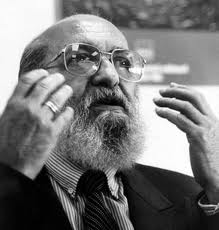
"Education either functions as an instrument which is used to facilitate integration of the younger generation into the logic of the present system and bring about conformity or it becomes the practice of freedom, the means by which men and women deal critically and creatively with reality and discover how to participate in the transformation of their world." — Paulo Freire (Pedagogy of the Oppressed)
I believe that education is the practice of freedom. The problem is that school is so often confused with education. School accomplishes the first part of the above quotation. It re-inforces the present and preserves the status quo. School is almost propaganda for the status quo. Education and learning come from the truth around you. Empowerment comes from the self discovery of that truth. We must all become self learners and self teachers with those around us. Learning liberates the spirit!!
"We should all be judged by what we do to empower other people."
-Bill Clinton 2010
Friday, December 24, 2010
Ivan Illich--revisit him

Many students, especially those who are poor, intuitively know what the schools do for them. They school them to confuse process and substance. Once these become blurred, a new logic is assumed: the more treatment there is, the better are the results; or, escalation leads to success. The pupil is thereby "schooled" to confuse teaching with learning, grade advancement with education, a diploma with competence, and fluency with the ability to say something new. His imagination is "schooled" to accept service in place of value. Medical treatment is mistaken for health care, social work for the improvement of community life, police protection for safety, military poise for national security, the rat race for productive work. Health, learning, dignity, independence, and creative endeavour are defined as little more than the performance of the institutions which claim to serve these ends, and their improvement is made to depend on allocating more resources to the management of hospitals, schools, and other agencies in question. Ivan Illich Deschooling Society (1973: 9)
Thursday, December 23, 2010
New Literacies
I hope that you enjoy this video. It looks pretty good from my stool! Please comment on it.
Wednesday, December 22, 2010
Government needs a Warrant to read EMail
The 6th US Circuit Court of Appeals ruled yesterday in US vs Warshak that the government needs a warrant to compell an ISP to turn over email to the government.
See the entire EFF article for all of the details.
Given the fundamental similarities between email and traditional forms of communication [like postal mail and telephone calls], it would defy common sense to afford emails lesser Fourth Amendment protection.... It follows that email requires strong protection under the Fourth Amendment; otherwise the Fourth Amendment would prove an ineffective guardian of private communication, an essential purpose it has long been recognized to serve.... [T]he police may not storm the post office and intercept a letter, and they are likewise forbidden from using the phone system to make a clandestine recording of a telephone call--unless they get a warrant, that is. It only stands to reason that, if government agents compel an ISP to surrender the contents of a subscriber's emails, those agents have thereby conducted a Fourth Amendment search, which necessitates compliance with the warrant requirement
See the entire EFF article for all of the details.
Wednesday, December 15, 2010
EFF News
In a decision issued yesterday, the Sixth Circuit Court of Appeals ruled that the government must have a search warrant before it can seize and search emails stored by third party email service providers. Closely tracking arguments made by EFF in our amicus brief, the court found that email users have the same reasonable expectation of privacy in their stored email as they do in their phone calls and postal mail.
And today, the Third Circuit Court of Appeals agreed with EFF and refused the government's request to reconsider an earlier pro-privacy decision, which held that federal magistrates have the discretion to require the government to get a search warrant based on probable cause before obtaining cell phone location records. That decision, based on EFF's briefing and oral argument as a friend of the court, has implications far beyond cell phone location privacy. It could apply to a broad range of communications records - including the content of your emails, your web search or browsing histories, as well as the location of your phone
Sunday, December 12, 2010
Congressman Hoyer's response to previous Post
Dear Mr. Constantine,
Thank you for contacting me to share your views on S. 3804, the Combating Online Infringement and Counterfeits Act. I certainly appreciate your taking the time to make me aware of your concerns about this legislation.
S. 3804 would give the Justice Department an expedited process to crack down on websites that offer counterfeit materials or infringe on copyrighted content by offering the content without the consent of the copyright owner. The legislation would aim to regulate the distribution of copyrighted works and fight against online piracy. S. 3804 was introduced in the Senate by Senator Patrick Leahy of Vermont on September 20, 2010, and was referred to the Senate Judiciary Committee. You may be sure that I will keep your concerns in mind should this legislation be considered by the House of Representatives.
Thank you again for sharing your thoughts with me. I encourage you to visit my website at www.hoyer.house.gov. While there, you can sign up for the Hoyer Herald, access my voting record, and get information about important public issues. If I can be of further assistance, please do not hesitate to contact me.
With kindest regards, I am
Sincerely yours,
Steny Hoyer
Thank you for contacting me to share your views on S. 3804, the Combating Online Infringement and Counterfeits Act. I certainly appreciate your taking the time to make me aware of your concerns about this legislation.
S. 3804 would give the Justice Department an expedited process to crack down on websites that offer counterfeit materials or infringe on copyrighted content by offering the content without the consent of the copyright owner. The legislation would aim to regulate the distribution of copyrighted works and fight against online piracy. S. 3804 was introduced in the Senate by Senator Patrick Leahy of Vermont on September 20, 2010, and was referred to the Senate Judiciary Committee. You may be sure that I will keep your concerns in mind should this legislation be considered by the House of Representatives.
Thank you again for sharing your thoughts with me. I encourage you to visit my website at www.hoyer.house.gov. While there, you can sign up for the Hoyer Herald, access my voting record, and get information about important public issues. If I can be of further assistance, please do not hesitate to contact me.
With kindest regards, I am
Sincerely yours,
Steny Hoyer
Saturday, December 04, 2010
Combating Online Infringement and Counterfeits Act

There is a bill before the Congress of the United States which threatens to stiffle even further the free spread of information across the Internet. The Electronic Frontier Foundation has come out against the Bill and I believe that this bill needs to be defeated. I urge you to write to your member of Congress and U.S. Senators urging the defeat of this bill.
Thursday, December 02, 2010
New PodCast Fron Zach and Irbs......
Here is another podcast from two students at the Wakefield School in The Plains Va. This pcast appears weekly in the school's digital newspaper.
Subscribe to:
Posts (Atom)