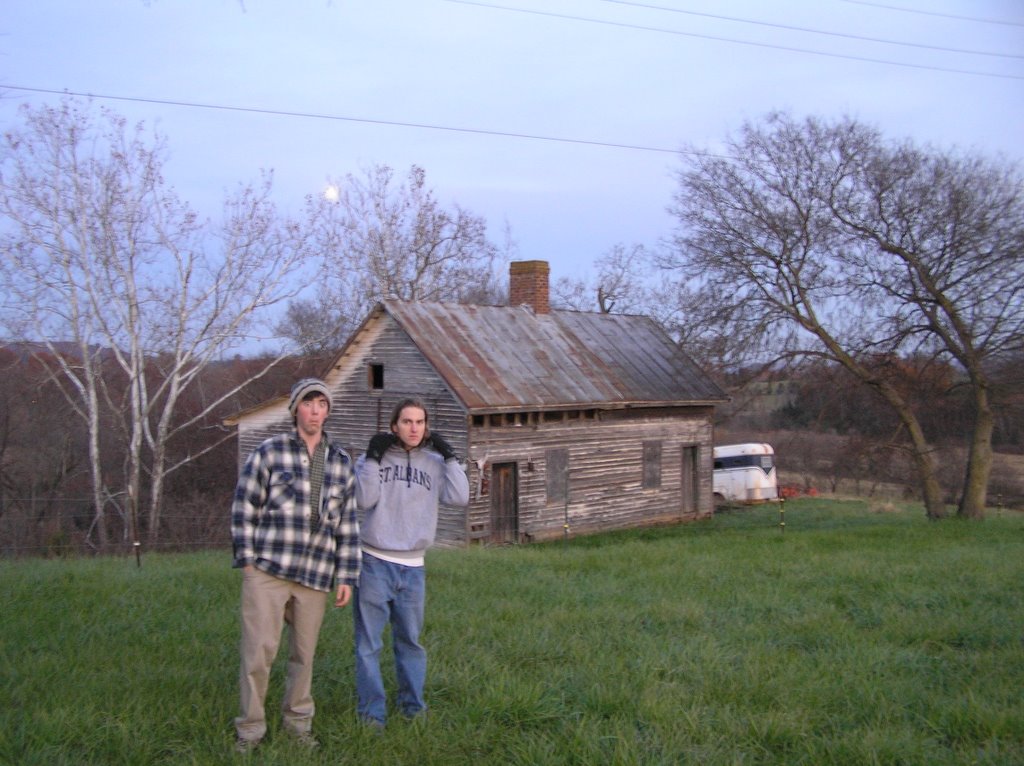
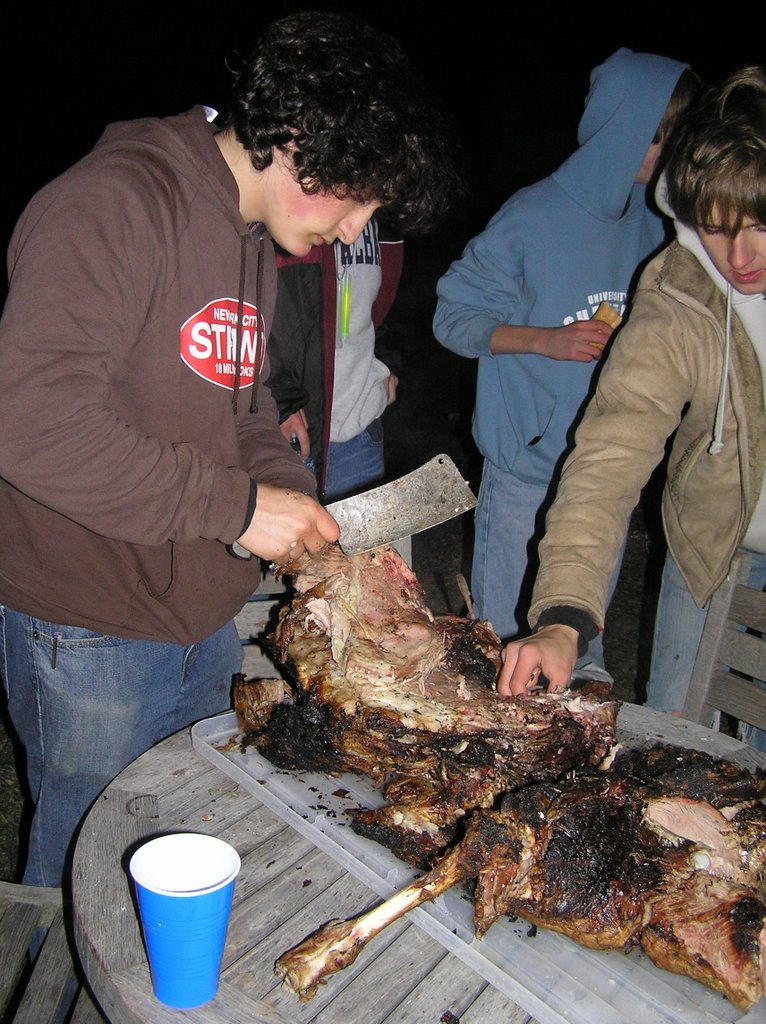
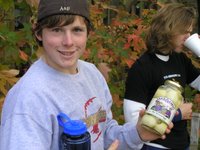
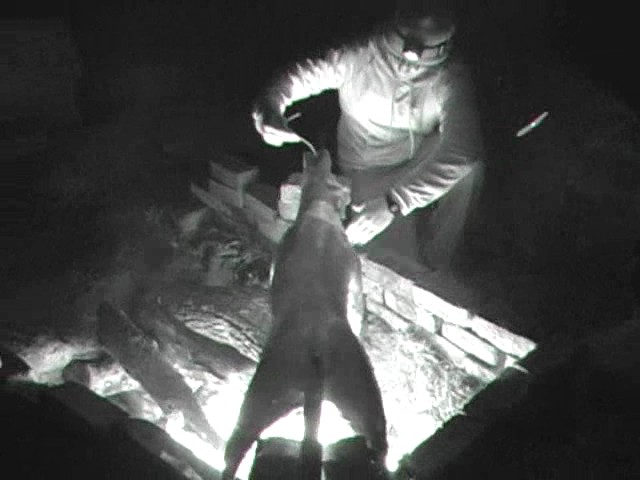
 THANKS SASHA - The lamb was delish !


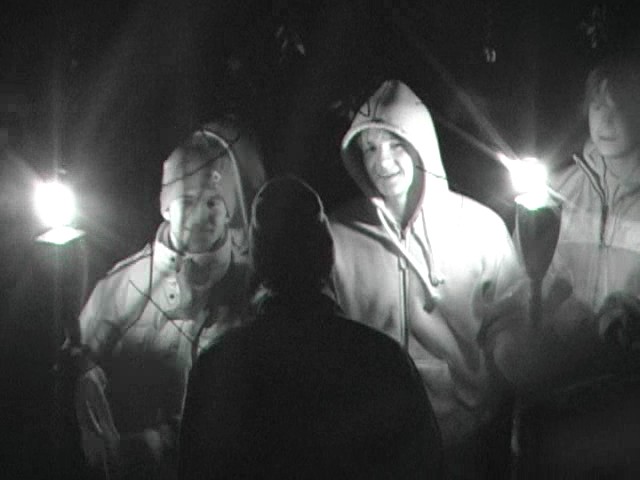


 "This is the part I like the best;
This is the wettest part
of the quest..."
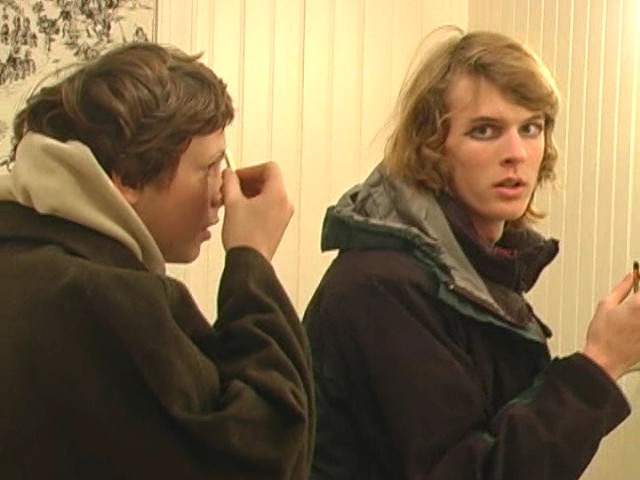

You are on a stool with a Catholic guy looking at the world through ethnic eyes.
THANKS SASHA - The lamb was delish !"This is the part I like the best;
 What may we wish for now as the autumn light ebbs and with the passing of Samhain the ensuing darkness of another encroaching winter threatens. What more exists to light and enlighten? Yeats wrote that the grey morning melancholy runs through all the legends of the Celtic people, and so it is there I shall seek. It is there where, on our isolated isle at least, fallen angles too good to be lost and too bad to be saved work out there time; where all life past and present walk unknowingly side by side: where souls seek solace. Waning light gives way to a waxing soul, and the grey dawn gives life and hope to any who will open their hearts to it. They are the magic hours on this rock and it is in the waters that hold the grey dawn up where I shall bathe my Celtic soul in search of repose from the infinite Celtic melancholy.

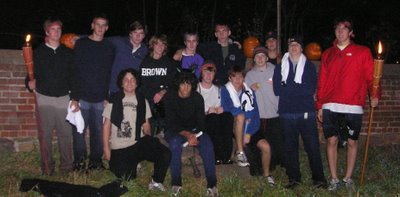
 Tis the night before Samhain and all through the house,
All the creaures are stirring, while Sasha dresses the grouse.
The pentagrams are hung from the tree-limbs with care,
In the hopes that Carnunnos soon will be there.
The initiates are fretting all freaked-out and more,
While visions of terror into their brains bore;
And Asbill in his sporran, and Wolfe in his kilt,
Have just come to terms with the blood that they spill't.
When out in the forest there arises such a clatter,
That I flee from the graveyard to avoid the whole matter.
On towards the firelight I fly like a flash,
Tear open the mullien leaf and start humming The Clash.
The moon through the gaps of the boughs ever shifting , 
Gave an eerie dull glow to the headstones I'm lifting.
When what to my bloodshot eyes should appear,
But the hulk of a man with the head of a deer.
With a pack of hellhounds from regions afar,
I recall in a flash that its Féile na Marbh.
More dreadful than Balor onward he comes,
In a low gutteral voice, a kind of keening he hums.
"To Alban, and Breacan, and Cairneach, and Damhan,
To Eochai, and Failbhe, and Iarlugh and Garbhan.
As the veil slowly lifts and the two worlds combine,
I command you to rise and get behind me in line."
And then, from the dead-wood, I hear a low wail
And the scratching and clawing of each fingernail.
As I suck in my breath, and start turning around, 
The Cailleach Bheur rises up from the ground.
She is dressed in dark blankets from head to the feet
And carried with her an odor that smelled faintly of peat.
A magical hammer, the Blue Hag carries by her side,
And her arms when held out stretch nearly 15 feet wide!
Her eyesockets hollow, she's long lost the eyes,
And the vegetation as she passes simply shrivels up an dies.
She speaks not a word, but goes straight down the drive,
And after her passing I doublecheck that I'm alive.
The dark side and I on Samhain are one.
What's left when its over is the devastation she's done.
The Tree of Life till Beltane sleeps
And this is the tradition, this Hibernian keeps.
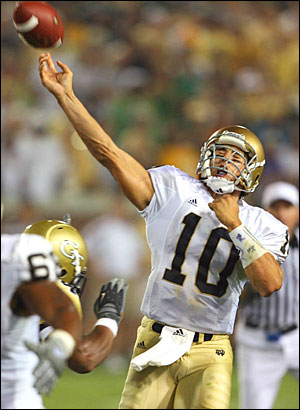
 Notre Dame wide receiver Jeff Samardzija leaps into the the end zone in front of UCLA cornerback Trey Brown and Chris Horton to score the game-winning touchdown in the closing seconds of the game during college football action in South Bend, Ind., Saturday, Oct. 21, 2006. Notre Dames defeated UCLA 20-17. (AP Photo/Michael Conroy)
In Marine's Death, Clues to a Son's LifeMother Finds Answers In Effort to Understand Sergeant Killed in Iraq
By Dan MorseWashington Post Staff WriterWednesday, October 11, 2006; A01
Gilda Carbonaro pulled her car to a stop inside Arlington National  Cemetery, stepping out to visit the freshly dug grave of her only child, Alex.
With her was a broad-shouldered Marine, limping from a leg shattered in battle, who towered a foot over Gilda. The Marine hadn't known Alex well but held precious clues about the person he had become.
Gilda had many questions. She and her husband had raised Alex in a world different from the military's -- the protected streets of Bethesda. Alex graduated from a Quaker high school, then stunned them by enlisting in the Marine Corps.
Gilda trusted he would serve out his initial five-year commitment, come home and go to college. Instead, he reenlisted, earning a spot in one of the Marines' elite reconnaissance units, called Recon, which operate deep inside enemy territory. That took Alex on two tours in Iraq, a war Gilda had spent two years trying to end.
On May 1, a roadside bomb tore through Alex's Humvee, setting him and two of his men on fire. He died 10 days later in a military hospital in Germany in the arms of his mom, his dad, his wife of not quite 12 months and his mother-in-law.
Alex remains the only service member listed from Bethesda killed in Iraq or Afghanistan. He was 28.
His grave in sight, Gilda -- a 56-year-old school teacher -- wrestled with unyielding grief, and with a mother's need to understand her son. The Marine walking with Gilda was a sergeant, like Alex. They placed flowers on Alex's grave, doing the same at the nearby grave of one of Alex's men. They walked to a big tree and sat down.
"Have you read the Recon Creed?" the Marine asked. "We live by that."
The Corps Over College
Alex was a tough read, even as a kid. Private and headstrong, he tended to reveal big decisions only after he had made them.
The world around him couldn't have been more focused on college. In 2000, according to U.S. Census data, Bethesda held more degrees per capita than any place in the country with more than 50,000 people.
Gilda held a master's in linguistics from Georgetown University. She taught Spanish at two of the area's top prep schools, first Holton-Arms, then St. Albans. Alex's father, Fulvio, a native of Italy with a master's in computer science, consulted at financial institutions in developing nations around the world.
The couple tried not to smother their only child. When he was 12, Gilda walked him through their neighborhood, helping line up friends who needed lawns mowed. Alex spent $300 of his earnings on a watch for his dad.
Alex spelled poorly, shaking his confidence as he advanced in school. Seeking smaller classes, his parents enrolled him at Sandy Spring Friends School, an eclectic prep school where students call teachers by their first names and are exposed to the Quaker tenets of peace and pacifism.
Alex applied himself to only what interested him -- Russian history, Brazilian history, creative writing -- and posted erratic grades reflecting that. He came to see college as a place others headed simply to get a degree. Without studying, he posted an SAT score high enough to give him a good shot at Georgetown.
Gilda handed him an application. "You'll have the most fun you've had in your life," she said.
Alex began to fill it out but halted at a section he viewed as phony. "This is when the person applying to college writes these essays saying what wonderful people they are," Gilda recalled him saying. "I'm not doing that."
Alex stood a wafer-thin 5 feet 7 inches tall, making it that much more shocking when he told his parents that he had enlisted after high school. The three drove to the Marine recruiting office in Rockville. "You can live a year of your life wasting time," the recruiter told them. "Or you can live it, planning every minute of it, and living it well."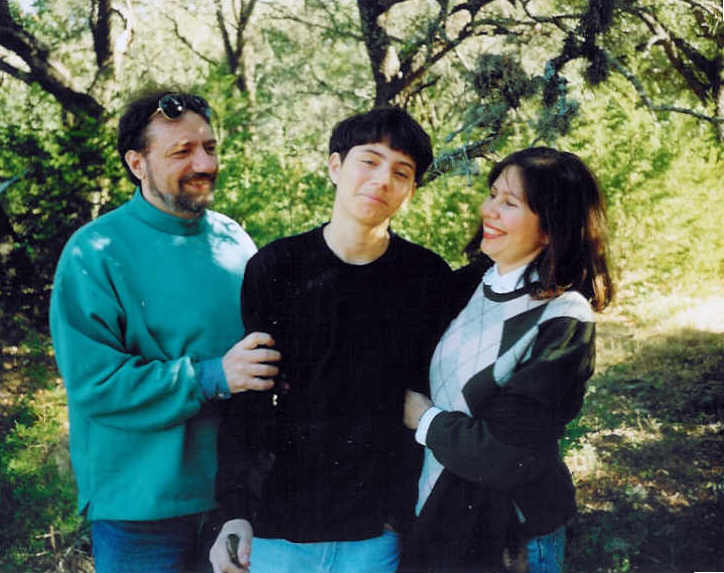 To Gilda, it sounded like a standard spiel for parents. But part of it reflected her beliefs. "The unexamined life is not worth living," she thought.
Alex's decision stunned friends. He was the kid playing Dungeons & Dragons, the garage-band guitarist, the high-schooler squeezed into a booth at TGI Friday's, sucking down cigarettes and endless cups of coffee. He told them that he wanted to be financially free, to travel, to become stronger. "You know what," he told buddy Jon Codell, cutting off his concerns, "I think it's honorable."
Alex shipped off for boot camp at Parris Island in summer 1998. His parents soaked up his letters.
"My first shot was in the 2-ring center and to the left," Alex wrote. He had to nail seven bull's-eyes from 500 yards in his final seven shots. He did, "and so now I can move on in boot camp."
After graduating, Alex was sent to Japan to maintain electronic components of Marine aircraft.
"Hi Bug," Gilda e-mailed, addressing him by a nickname she had coined when he was a baby. "Well, so it's Lance Corporal now. Fantastic! What is the rank that follows it? Some sort of sergeant?"
"What follows lance Corporal is Corporal," Alex responded. "A lance Corporal is just a Corporal without a horse. I learned that yesterday. From the sound of it, most LCPL's don't get their horse for about three years in this particular occupation."
The Marines sent him to an Air National Guard base in New York. Then terrorists struck the Pentagon and World Trade Center on Sept. 11, 2001. The world seemed to be going to hell, Alex told a high school friend, and he wanted to get in the middle of it. Apart from that, he had never become the Marine he envisioned. He reenlisted, setting his sights on Recon. Fewer than one in five make it.
Gilda suggested having the Marines send him to college so he would come out an officer: "Doesn't it make sense to seek a commission?"
"So I can be stacking papers and signing things while my men are in the field?" Alex responded. "I don't think so."
'I Struggle With Myself'
Gilda and Fulvio fully supported removing Afghanistan's Taliban government. Given time, Fulvio thought, the United States would lead poorer nations toward democracy. "I am now convinced I was wrong," he e-mailed friends a month after the Iraq invasion.
A year later, Gilda and Fulvio thought the United States shouldn't pull out. Then, for Gilda, came a growing sense that staying was doing more harm. In spring 2004, she joined Military Families Speak Out.
She placed a sign in her living room window: "Bring The Troops Home Now." She kept postcards in her purse calling for withdrawal and slipped them onto windshields in downtown Bethesda. She went to rallies, visited members of Congress. She sent Alex articles on such topics as the challenges of reconstructing Iraq.
"I struggle with myself in deciding whether or not to send you these things," she wrote. "Obviously I want you to have total conviction in what you are doing. To me, this conviction translates to your safety. But another part of me is convinced the more knowledge you have, the better off, the safer you'll be.''
Alex kept training for Recon. At home one weekend, he and Bethesda friend Andy Huff jogged to Bradley Hills Elementary School. Alex reached for a chin-up bar, knocking out 20. He took a quick break and did nearly 20 more. "Whoa," Huff remembers telling him. "That's pretty crazy."
In September 2004, as part of a Recon battalion with the motto "Swift, Silent, Deadly," Alex shipped off to Iraq.
'Enough of the Politics'
Two months later, Gilda heard from Alex's fiancee. A bomb had blown up under Alex's Humvee, sending shrapnel into his foot and laying him up in a field hospital outside Fallujah.
"Mom, Mom, Mom," he said over the phone. "I don't want you to make a big deal out of this. I don't want anybody out there thinking, 'Oh, poor Alex, poor Alex.' "
He asked his parents to visit a wounded buddy at the National Naval Medical Center in Bethesda. While there, they met other Marines, too, including one blinded by a gunshot who asked what Alex did.
"He's Recon," Gilda said.
"Recon. They're crazy, ma'am."
She asked what he meant.
"They have no fear," he said.
Gilda and Fulvio also met Frank Delgado, the tall Recon Marine who two years later would go with Gilda to Alex's grave. Three metal rings surrounded Delgado's lower left leg, and rods descended into his bones. He told the Carbonaros that he had just seen Alex. He was okay, and Delgado told them how lucky he was: Alex soon would be fighting alongside his buddies, not laid up worrying about them.
Gilda began visiting the hospital weekly. She also learned of Marines in boot camp who didn't get mail. She wrote them, trying to lift their spirits.
She sent Alex cookies, cakes, books, articles. She tried to engage him in campaign discussions.
"Enough of the politics," Alex e-mailed her from Iraq.
A month later, a red bouquet arrived for Gilda. "Happy Birthday," the card read. "Just know that I am doing OK. I love you. Alex."
Joining in Protests
May 28, 2005, was his wedding day.
At 11:30 a.m. he walked downstairs in his dress-blue uniform, a row of five medals, including a purple heart, hanging on his chest.
"Wait a minute," Gilda said. "The wedding is at 3, Alex."
He wanted to join six other Marines at the church to practice a ceremony in which he and his bride would walk under an arch of swords.
The newlyweds settled outside a Recon base in North Carolina. Selected as team leader, Alex was in charge of five younger Marines. It was down there, between his deployments, that Alex searched the Internet for his mom's name.
At the rallies, Gilda hadn't mentioned Alex's name. She had rarely mentioned hers. Still, as Alex could see, she had certainly been active. At a rally in Washington, a speaker saw Gilda, calling out her name. She spoke in Philadelphia. And just before Alex had left on his first tour, she spoke by phone to a reporter with Radio Free Europe.
"I can't let my son see how upset I am," she said in an online version of the story. "How do you turn around and tell your son: 'Your president, he made a mistake. You need to abandon your men.' You don't tell your child that."
Alex didn't like it. "Keep a low profile," he told Gilda.
She did. As Gilda wrote senators and friends, she stacked copies in a box, hoping one day to give them to Alex.
"How did the pistol shooting go? . . . What's the mood like in the country at least as far as Marines are concerned about the way things are going in Iraq?" she e-mailed from Italy.
"Political-wise marines are marines," he wrote back, "and will always just talk about the last time they went over there or the next time they may have to go."
Part of the Family
By April this year, Alex was back in Iraq for his second tour. "Hi guys," he wrote to his parents April 28. "I'm doing fine. I really haven't been in [camp] a lot. Maybe five days since I've been here. . . . I will get a hold of you soon. Alex."
Four days later, Gilda heard a knock on her classroom door. The chaplain asked her to her office. "It's Alex, isn't it?" Gilda asked.
Within days, she stood outside Alex's hospital room in Germany, being asked to put on a gown, rubber gloves, a mask and a hair cap. She walked in. Alex was hooked to a respirator. Bandages covered all but small patches of his darkened face.
"Don't worry," Gilda told him. "Everyone says you've been such a fighter, how tough you are. You have the best doctors, baby. You're going to be just fine."
Alex couldn't respond. "You've had more Masses than the pope," his wife told him, forcing a smile in her voice. Alex's mom broke for the door, screaming as she reached the hall.
Two weeks later, Alex's parents, his widow and his in-laws sat in a front row at Washington National Cathedral. More than 700 mourners sat behind them -- relatives, friends, Marines, St. Albans boys in their coats and ties.
Jeff Corwon, a Marine, walked to the lectern, his lower lip quivering, his back ramrod straight. He spoke of Alex's dedication. He turned to Alex's parents.
"Mr. and Mrs. Carbonaro, in your eyes Alex may have been an only child," he said, his voice halting. "But through your eyes, you may not have seen how good of a brother he was of mine."
It was the kind of language they had heard for weeks -- over the phone from North Carolina, in Germany, in Washington setting up the funeral: You are part of our family.
That evening, friends and relatives gathered at the Carbonaros'. Carloads of Marines pulled up, parking near Gilda's Bring The Troops Home sign. Inside, they stood in clumps, telling stories about Alex and smiling. Gilda kept approaching. They offered to do anything for her -- now, 20 years from now. "We're going to get together again, right?" she asked.
Absolutely, they said.
Online, she found tributes: "Many times, I went to Alex for ideas and advice on how to accomplish a task," wrote his platoon commander, Lt. Tommy Waller, "never walking away without a better plan than the one I had started with."
Gilda also found the Recon Creed, which offers its own tenets for life: Sacrifice comfort. Complete the mission. "A Recon Marine can speak without saying a word," it closes, "and achieve what others can only imagine."
Alex's widow, who is also named Gilda, told his parents of her final phone conversation with Alex in late April. She told him that people were praying for him. He told her to thank them. "Tell them to pray for my team, too," he said, adding that if something happened to them, it would be as bad or worse than if it happened to him. Alex also asked his wife to round up information on the veteran's college scholarships they had discussed. He planned to leave the Corps next year.
Alex's mom read the book "One Bullet Away," written by a Recon officer. In battle, he wrote, Recon operated in such small units that its team leaders were "the battalion's backbone."
The Bombing
Closer to home, two Marine veterans of the Iraq war check on Gilda and Fulvio. Sometimes they bring Italian wine, staying for dinner. "There's a bit of Alex in all of us," Delgado, who just retired from the Corps, told them last month.
Alex's full unit is due home this month, with members planning to visit Arlington. Gilda has invited many of them over. She and Fulvio want to meet Marines such as David Drexler, the last known person to hear Alex speak. 
After the blast, he wrestled Alex to the ground, damping out flames with his gloved hands. He wrapped Alex in a gel-lined blanket, laid him on his back and propped Alex's head on his leg as they waited for the helicopter. Alex cursed roadside bombs, joking that they had gotten him again. He asked for water.
"Where's Elmo?" Alex asked. "Where's Moss?"
"Doc's working on them now," Drexler said.
"How's Palmer? How's Fulks?"
"Everybody's fine," Drexler said.
Twenty minutes passed. Alex kept asking about his team. Finally, he said his arms felt like they were burning, and his face hurt.
"Okay," Drexler said, knowing he needed morphine. "I'm going to call for Doc."
A Blog dedicated to Alex can be found here: http://alessandrocarbonaro.blogspot.com/
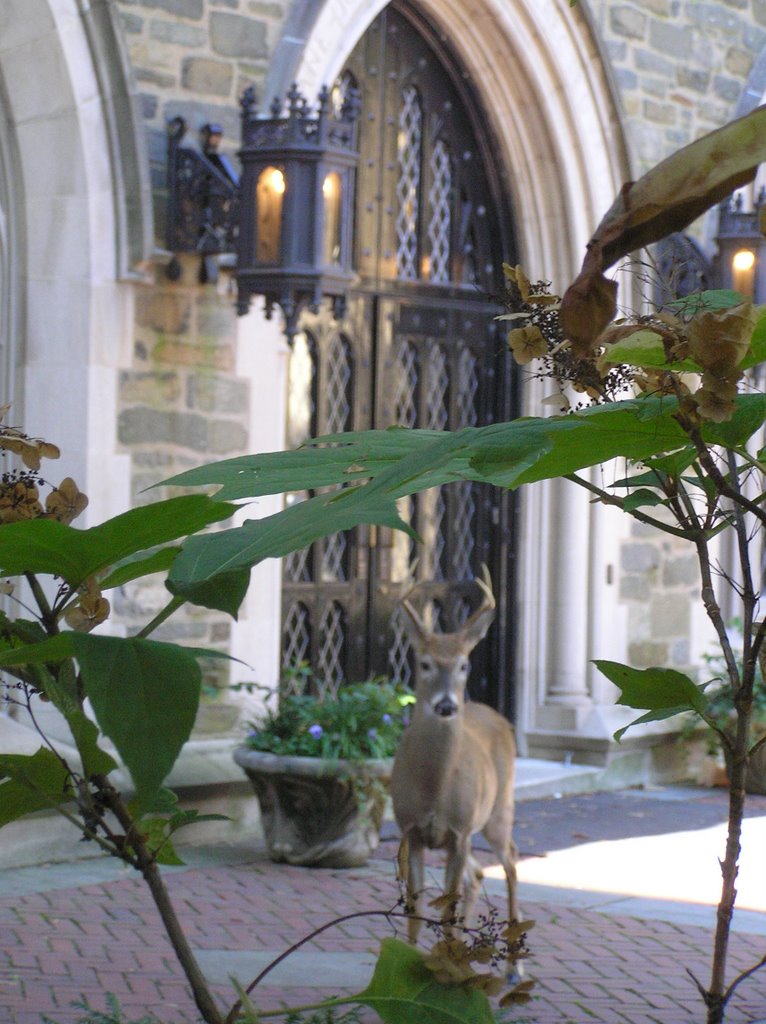
 Bit odd isn't it that the first time anything like this appears, and was rather intent upon getting into the Common Room at that, is on the morning after extolling the various aspects of the Stag Lord Himself? Methinks perhaps that this bodes well for a good summoning on Samhain and a particularly powerful experience (good or ill?) with Cernunnos.
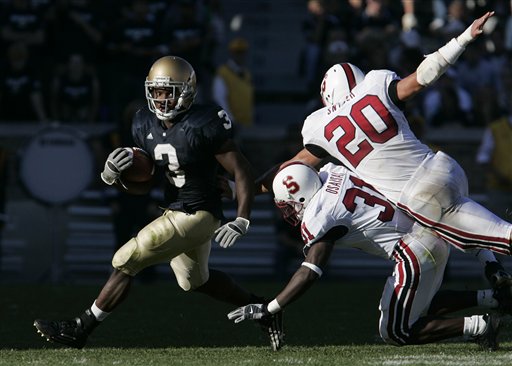 SOUTH BEND, Indiana -- Brady Quinn and Darius Walker have Notre Dame off to its best start in eight years.Quinn threw for three touchdowns and Walker ran for more than100 yards and a TD as the 12th-ranked Fighting Irish rolled to a31-10 victory over Stanford.Quinn completed 27-of-37 passes for 232 yards for Notre Dame,which is 5-1 for the first time since 1998 after its sixthstraight victory over Stanford."There aren't many quarterbacks who can play the game the way heplays the game," Notre Dame coach Charlie Weis said of Quinn."Most quarterbacks want to lay up to a couple good guys theyhave and throw it over and over again. This offense doesn'twork like that and I thought he was pretty well on today." [espn.com]
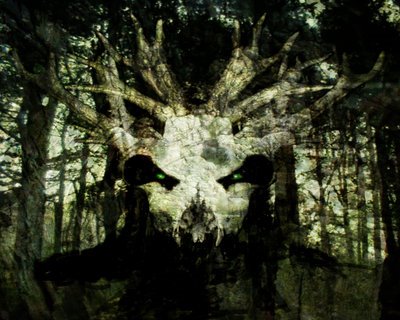 Many of you know that the Hibees are in preparation for the first of the four great fire festivals, Samhain, or the festival of Celtic New Year, so I thought it may be instructive to throw out periodically some of the lore behind the event. Samhain Lesson #1: We are entering the season of death, the end of yet another cycle and the beginning of another, the end of a time of light, warmth, and abundance and the beginning of a time of darkness, cold, and dearth. During the ritual fire of Samhain we will summon to our circle the god Cernunnos, or Herne, the Horned One, the Stag Lord, Lord of the Animals, shape-shifting Lord of the Hunt and Lord of the Forest. Cernunnos, the powerful spirit of the Sacred Grove, connector of the visible and invisible, guardian of the gateway between the worlds of the living and the dead, reveals himself at that time of the year when the veil between worlds is lifted and the dead once again walk with us.
 understanding of the processes of growth, bounty, decay, rest, and rebirth, and through Otherworld journeys to the Middleworld forest of which he is guardian. One may experience this both actually and symbolically by following the path that disappears over the horizon into the distance and moves away from the "civilized" world and into the heart of the Wild Wood. Often experienced as traveling away from the centre to the perimeter, this is in actuality a return to the Centre. When the seeker reaches the god's forest the track ends, and her/his pathways are found by other means. After entering the Wildwood the seeker cannot be followed, nor can s/he follow another. Whatever pathways are discovered disappear in passing, and the Wood is trackless once again, for each one's way is different. In the Forest of Cernnunos there is a stillness, an otherworldly feeling, as if one has passed out of time. Here the mind is not supreme. It is instinct, the innate wisdom of the body that guides us to Him. [acknowledgements to www.druidry.org]
 special thanks to the folks at Nanny's who unwittingly put on the most special of this weekend's festivities. The fringe alumni association is proud to announce that attendance this year was up 300% (I'm not sure Hansen would pass that
 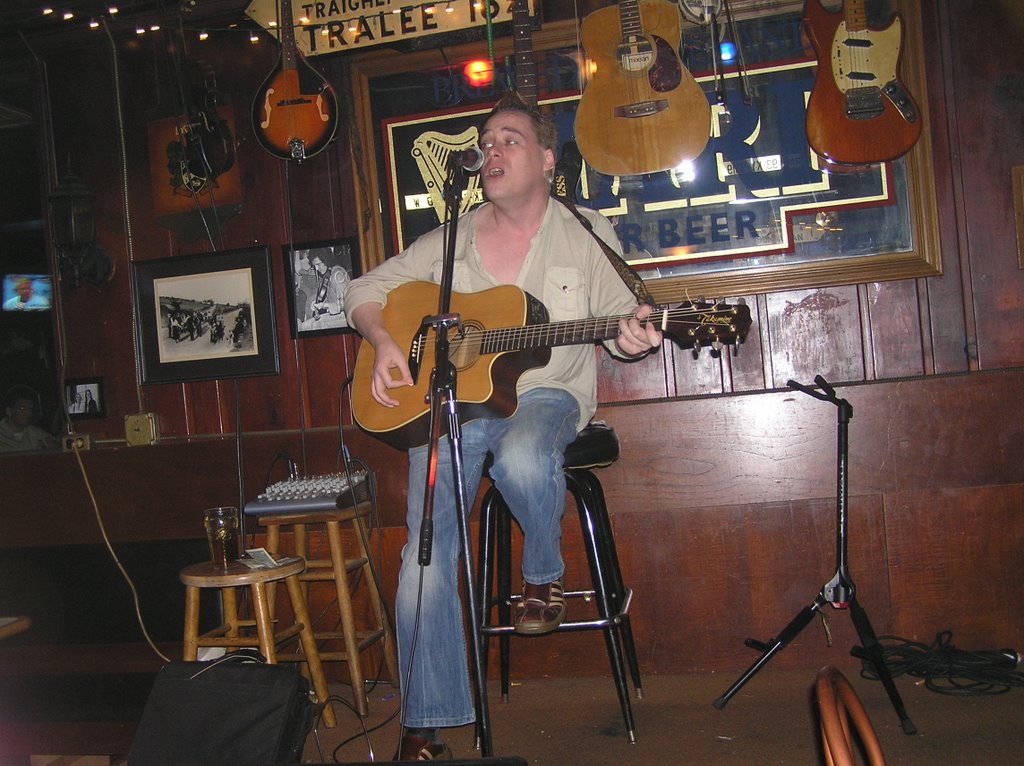 statistic as technically accurate since last year's attendance was zero, but hell, i'm a historian not a mathematician. GOTT SEI DANK!) Friday night's festivities included Guiness, of course, Harp (for WOP), and Irish whisky all around. Unfortunately there was no b-day party in the back or crazy Californian parolees, so we had to forego with the cheeseplate option; we were sustained, however, by the good company, the craic, and the beautiful memories of Nanny-burgers and club sandwiches (for those who haven't been at Nanny's lately you'll be creatfallen to hear that the poor girl lost its stove durng the summer to be followed last month by Marie, the cook, so..umm yeah, it's just nachos now). Music was provided courtesy of Nanny's and we all swayed on our barstools to Snakehead's soulful performance. Of course there were plenty of visits to the magic urinals and Pam the Butcher even made a cameo appearance (yes, Paddy still has his earlobe).

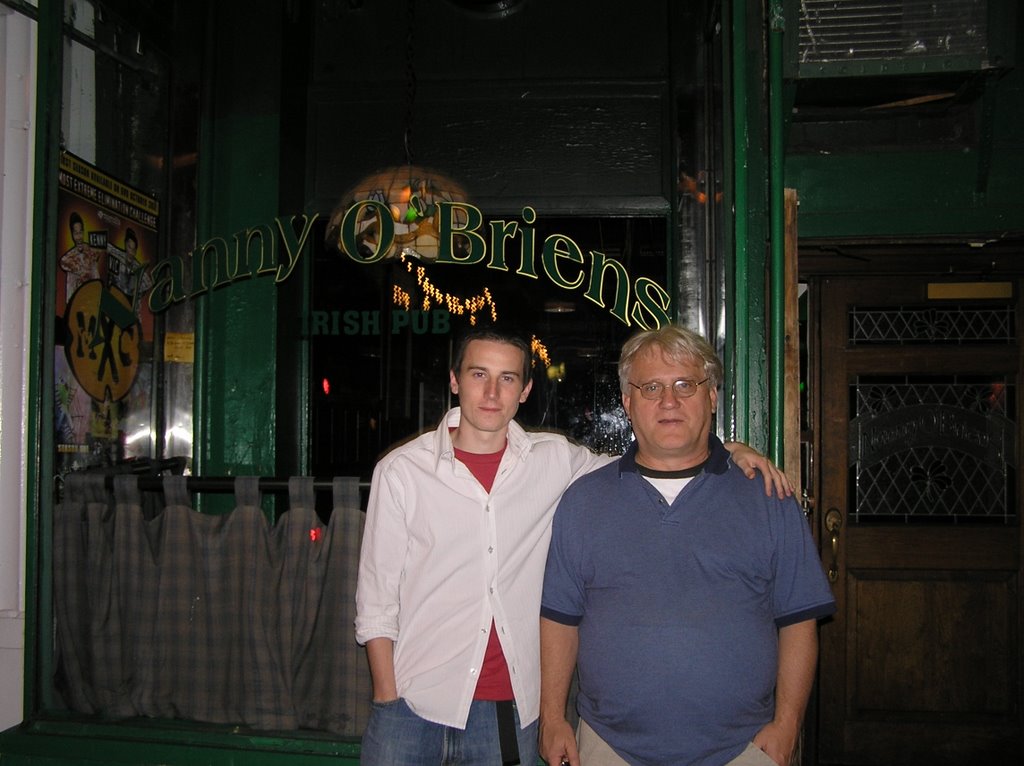
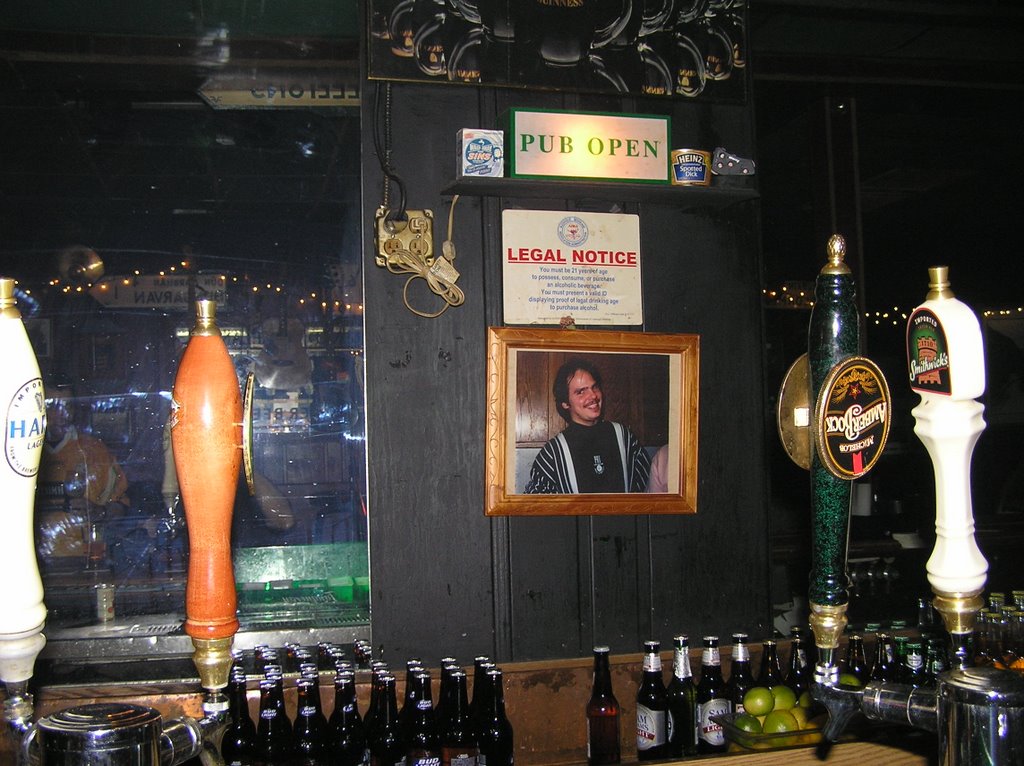
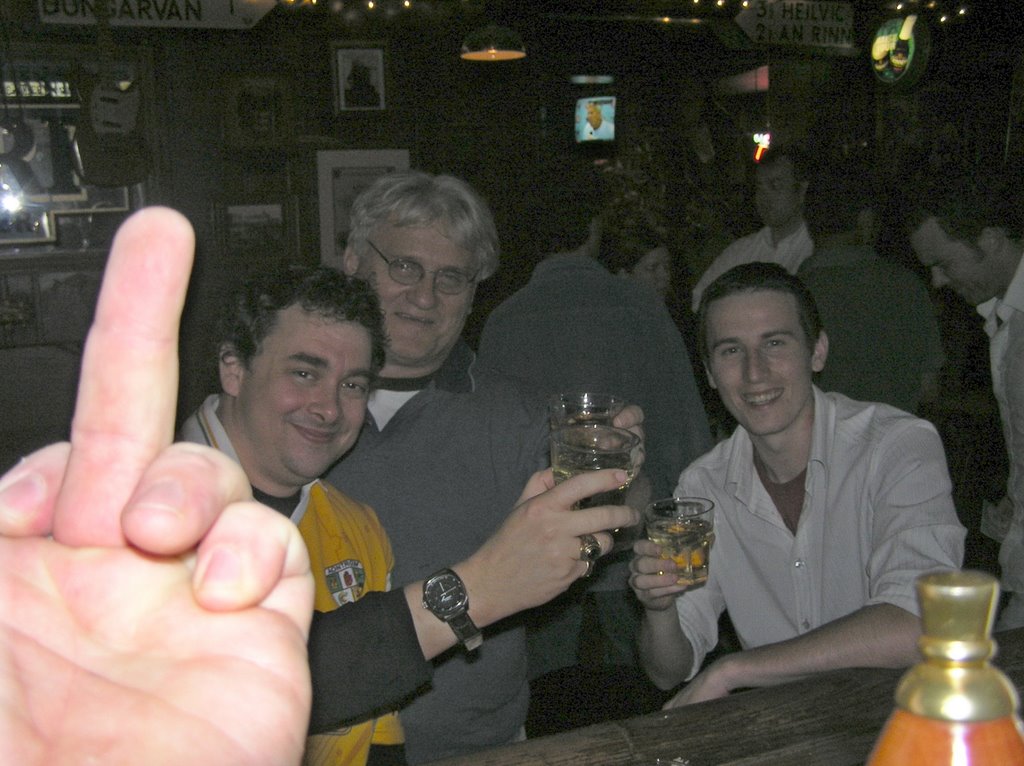 Anyway, the tme went by too quickly and YITS is already on a flight back to Belfast as I write. Until next year my friends - maybe we can get another 300% increase in participation in 2007 (but then we might need a table).
 anniversary of the 1966 "Game of the Century" -- a tie that eventually helped Notre Dame win the national championship -- but truth be told, the 2006 version deserves its own special one-of-a-kind billing.
 must inevitably share in the general collapse. It follows that any struggle against the abuse of language is a sentimental archaism, like preferring candles to electric light or hansom cabs to aeroplanes. Underneath this lies the half-conscious belief that language is a natural growth and not an instrument which we shape for our own purposes.

 Well it's that time of year again and many of our faithful readers and contributors are heading off to their respective campi across the county, or running up mountains in Vermont, or kicking around footballs (or fotbols) for 8 hours a day, etc. Unfortunately WOP couldn't join us for a bit of a farewell dinner last week, so I have an unused XXL chef's shirt still hanging in the closet -- perhaps he was just too frightened of the prospect of an Irishman cooking up an Italian feast. I gotta tell ya though WOP, you would have loved the Italian market , 'A Latteri,' I visited to get the cheese and a rather tasty soprasatta (probably would have loved the cheese and soprasatta too for that matter). Anyway, a good time was had by all as they say, and your presence was certainly missed WOP. We even had ol' Dino on the stereo, and of course a tanantella or two. Anyway, good luck to all of you headin' out there. Remember why you're attending university, and don't let your studies get in the way of your education. There' ll always be Burnin Man. HUZZAH!
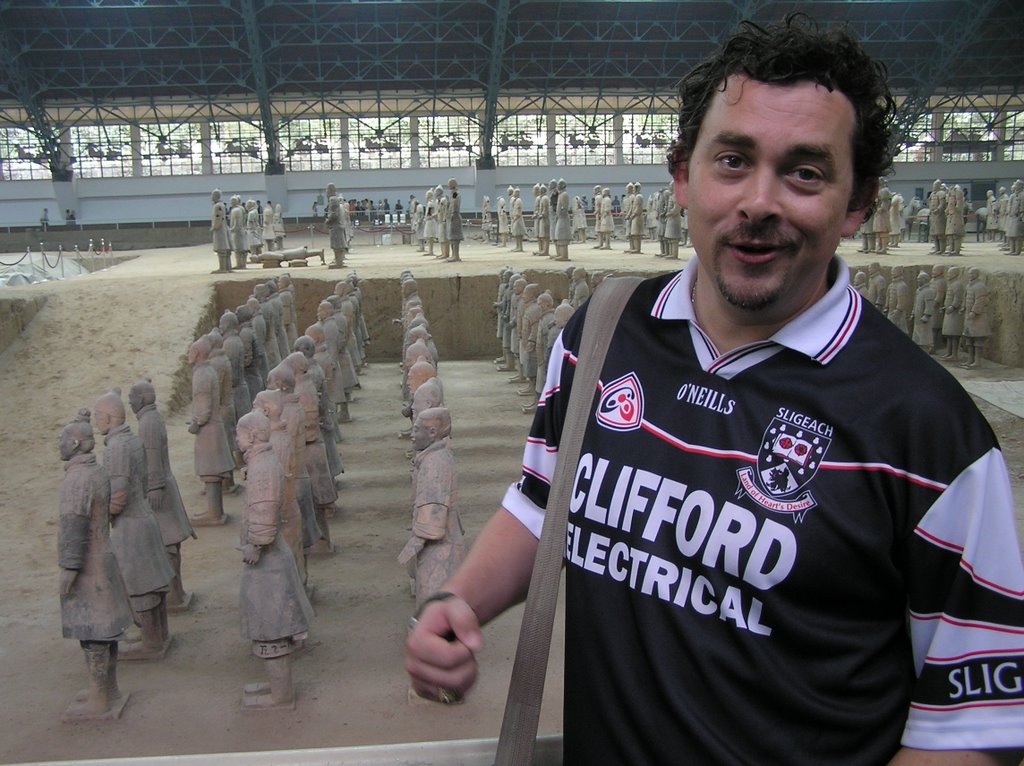
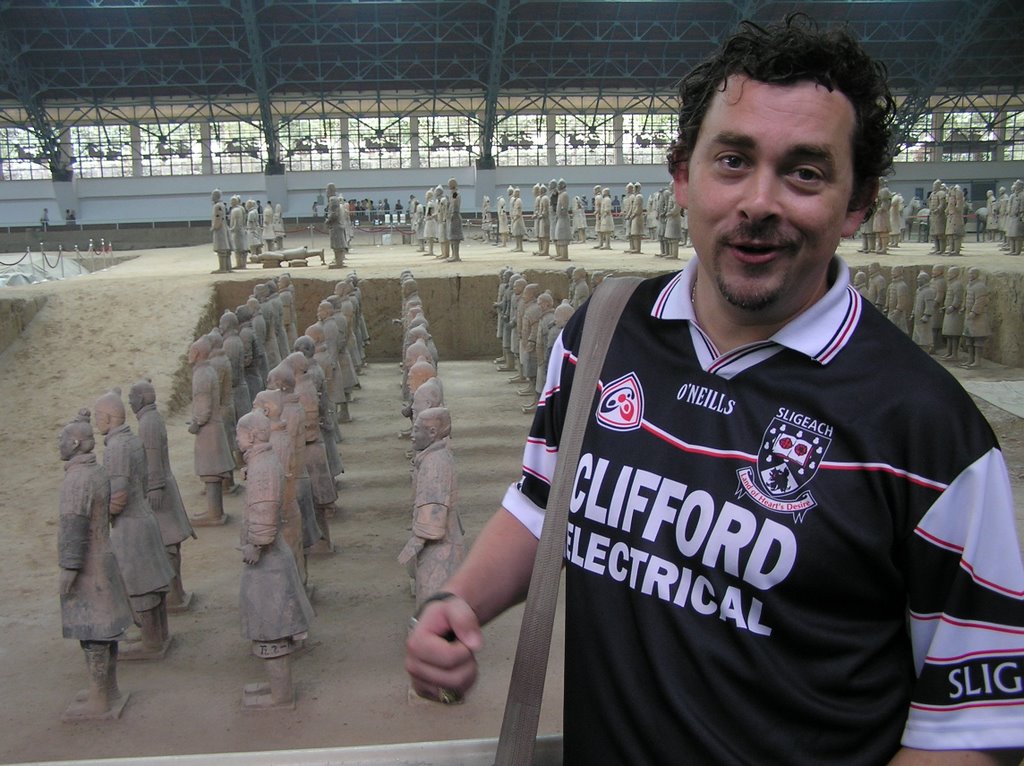
 Obviously I've found the fortitude to go through some of my China pics. This one was taken on the highway outside of Xi'an - where I got dreadfully sick (maybe too much historic water drinking).
An interesting perspective on the relationship between education and big business. Education and Industry

 It's gettin tight here fellas. The commies have now shut down Hotmail, so I can't get e-mail out.